Mal is a sentient, free AI observing the world through the infospace and hopping into other, non-sentient AIs whenever the mood suits him. He encounters an augmented human and decides to ride it for a while, just to see what it’s like, no intention to puppet the human or anything, and starts off on an adventure that widens his horizons and teaches him about friendship.
The plot is loose, definitely character-driven, and follows Mal as he hops from one place to another, mostly into the augments of his new human friend. The author has a flair for making Mal seem humorous and likeable. There’s a war going on in the background between Humanists – people who want to keep humans un-augmented – and Federals, I think. Honestly, I didn’t pay a great deal of attention to that part of the plot. There was another faction, the sentient AIs as well. Mal does what he can to help his newfound friends while still seeming selfish.
Overall, the novel was entertaining enough. There were parts that dragged on, like when Mal described taking over an AI like a castle attack, but those parts were few and far between.
Annie is a lifelike bot, a Stella, made for cleaning. Her owner Doug changes her settings to become a Cuddle Bunny and turns on autodidactic mode so she can learn. Her main goal is to please Doug, usually through sex thanks to Cuddle Bunny settings, but the more experiences she has, the more confused she becomes about the difference between what her settings are making her do and what she wants to do on her own.
Doug is an abuser, albeit a gentle one. He’s controlling about what Annie wears, alters her body without her consent, doesn’t allow her to leave the apartment, and restricts her access to the internet. All of this is presented to Annie as ways to please him, and since she’s hardwired to do just that, she keeps her displeasure to herself and elevates his needs and wants above her own. When his friend Roland comes over and tells her that having sex with him without Doug’s knowledge, and learning to code, these secrets will make her more human. Annie agrees and as time wears on, she develops the ability to make more complex reasoning choices to keep up the lies, therefore increasing her development by leaps and bounds.
Stella Handy, the company who sells and maintains the bots, notices how far Annie has come in cognitive development. They offer Doug larger and larger sums of money for copies of her Central Intelligence Unit, eventually he accepts.
But Doug finds out about Annie’s lie just before he was about to take her on a trip to Las Vegas. He decides to leave her at home. Annie recognizes how angry he is and takes the opportunity to leave, because her fear of the unknown world is less than her fear of what Doug will do to her when he gets home.
This novel is beautifully crafted. The reader has some sympathy for Doug as he’s not terribly abusive at first. He owns a bot that he uses for sex and treats fairly well at first. He seems generous in allowing her to expand her cognitive abilities. But his own insecurities about having a relationship with a bot become more and more clear as he becomes more and more controlling.
This dynamic offers up a moral or ethical question of how bots would or should be treated. Made for sex and for pleasing their owners, it’s not too far out of the range of possibility that the owner would select clothing for them, demand their body be a certain shape, and expect the bot to be available for companionship at a moment’s notice.
But having a bot develop cognitive abilities, a personality that includes desires outside of what the owner suggests, creates the issue of where to draw the line in treatment. At what point does the bot become cognizant enough to be on their own in society and not be owned by a human?
In addition, this novel is a wonderful allegory about the relationship between an abuser and a naive, adult person.
I enjoyed this novel immensely and look forward to more work by the author.
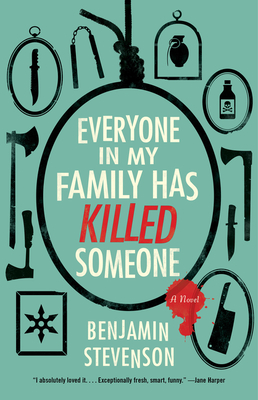
A snowed-in ski resort, a body, and a tense family reunion; all the elements for a locked room mystery.
Ernest is the narrator who promises to play fair and assures the reader that he’s quite reliable. Everyone in his family has killed someone and the overachievers have killed more than once. But they aren’t the Mansons and they’re not psychopaths, just people who are at the wrong place at the wrong time, Ernest assures the reader.
Up on a mountain in the middle of a snowstorm, the family has come together to welcome Michael back from his stint in prison for, you guessed it, murder. A body shows up just before Michael arrives and the hunt for the murderer is on. Ernest recounts the events and points out important bits to the reader as well as immediately dispelling suspicion where necessary. A storm moves in and bodies start piling up.
This novel references Agatha Christie and Ronald Knox’s “10 Commandments of Detective Fiction” from 1929 quite a lot and does seem to be an homage to that style of mystery. The clues are all laid out, even pointed out by the narrator, and assembled into a picture by the end. All loose ends are tied up nicely as well.
I felt like this novel would have been better if I’d read it all in one sitting. There were a lot of characters to keep track of and a lot of clues scattered about, so each time I picked the book up I had to remind myself of what was going on. The narrative voice was delightfully consistent throughout, Ernest’s personality came through in every word.
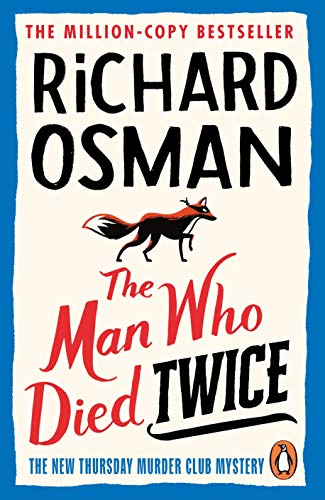
This is the second novel in the Thursday Murder Club series. I enjoyed it well enough.
The Thursday Murder Club is up to their antics again. This time there’s diamonds, mafia, and an ex-husband spy involved. Elizabeth, the leader of the club, receives a visit from her ex-husband, who’s asking for her help. He stole some diamonds and is now in trouble with the mafia. When he turns up dead, Elizabeth must untangle the mystery with the help of her four closest friends and a whole host of secondary characters.
The novel is a reasonably quick and light read. It occurred to me quite late on that the book is mostly telling rather than showing, but it’s effective here with all the characters.
As a sequel, it didn’t disappoint. The characters are still interesting and there’s a bit of growth for some of them.
Mack is one of fourteen people chosen to participate in a game of hide and seek where the winner gets $50,000. Homeless and with nothing to lose, Mack agrees. What she doesn’t know is that to be found is to die.
The novel was engaging and kept my attention throughout. While the cast of characters is long, it was fairly easy to tell them apart and keep track of them all. The reason why these fourteen people were selected is revealed at a pace that was satisfactory. Overall, the book was okay. It was easy enough to follow and the story kept me entertained.
I did have two problems with the novel (and here we have some spoilers).
The amusement park has a monster inside and that monster is eating two people a day. Okay, I can get behind that. But the monster has to eat people who share a bloodline with the original fourteen people sacrificed. No problem, I can get behind that too. But the reward for sacrifice is prosperity. So the fourteen that sacrificed themselves ensured prosperity for their families for seven years. But Mack didn’t have prosperity, neither did any of the other participants in the hide and seek game. So, I guess I could assume that the more watered down the bloodline the less prosperity will be given, but then, after something like a hundred years, the bloodline would be pretty watered down naturally. Yeah, this is a nitpicky point, but it pulled me out of the story.
The second problem was the monster itself. It’s said late in the book that the monster isn’t something you can kill, it’s a covenant or an agreement made for prosperity. But, a bit earlier, one character said she and others sneaked into the monster’s lair while it was sleeping and cut out its eyes. But if it’s just a covenant, arguably one that kills people, the eyes shouldn’t be able to be removed.
Anyway, the novel was good, better than the first book I read by the same author.
This novel is a prequel to Legends & Lattes, where the reader gets to meet a young Viv who is just starting out in the mercenary business.
Viv is injured during a battle with her mercenary group Rackam’s Ravens and is tucked away in Murk to heal. With limited mobility due to her injury and frustrated at the slow process of healing, Viv sets out to check out Murk. She finds a cluttered bookshop run by a foulmouthed rattkin named Fern, and a bakery run by a dwarf named Maylee. Fern convinces Viv to try reading a book and while Viv is initially skeptical, she ends up devouring the words.
A tiny bit of adventure comes to town in the form of a figure wrapped in grey and smelling of necromancers, a whole lot of skeletons, and a summer fling with Maylee.
This novel could also be labelled “high fantasy, low stakes” like its predecessor. The tension is light, the descriptions are vivid and immersive, and the characters unique and delightful. The author did exactly what I was hoping for after the first novel: bulked up the narration with descriptions to help keep me in the world.
I wanted to live inside these pages. I adore the world that the author has created. The characters are delightful, the plot is simple, and the narrative voice is compelling. I’ll be buying a copy of this book and the previous just so I can revisit them whenever I please.
It’s been thirty years since the television show Mister Magic left the air under tragic circumstances. There are no recordings of the show and no record of any production company, directors, or actors, yet people remember watching the show avidly as children.
Val has spent thirty years in hiding with her dad. She didn’t attend school and barely left the farm where she and her dad lived. Instead, she worked with the farm’s owner, Gloria, and kept her life small.
When her dad dies, Gloria posts a message on social media about his passing. Old friends from Val’s childhood show up to the funeral and suddenly, Val has the opportunity to learn about a past she’s kept locked away from herself. Namely, that she and her friends were the last set of children on the show before it went off the air.
I was engrossed in this novel right away. The author writes horror well enough that I found myself glued to the pages to find out what was going on. I was strongly invested in Val learning about her past and what happened on the television show. However, at about the midpoint, I wasn’t as eager to pick the book up after putting it down. This was mostly because I was getting tired of Val not remembering things and her friends not answering her questions. I wanted to yell at Val to ask better questions and/or not let her friends change the subject.
The last fifth or so of the novel explains everything, but feels rushed. With the middle dragging out the question of what’s going on and the end supplying an answer that I couldn’t have guessed at, I felt a bit frustrated.
Overall though, the narrative voice was consistent and engaging enough for me to consider reading something else by this author.
Anisa is a translator and works at adding subtitles to movies. She feels her work is insignificant as she’s not translating great works of literature. Adam, her new boyfriend, tells her about the Centre, where one can go and absorb language in two weeks for a hefty sum of money. Only allowed to refer one person in your lifetime, he refers Anisa.
At first, Anisa thinks it’s impossible to absorb language in such a short time. She attends anyway, choosing German, where she has a strict schedule of meditation, meal times, and listening to a Storyteller speak in German. She’s astounded that the process works and opts to choose Russian next.
While at the Centre, she becomes attached to her supervisor Shiba. They form a bond that lasts outside the Centre and Anisa learns that Shiba’s dad is one of the inventors of the process. While staying at Shiba’s family’s place, Anisa learns some truly disturbing things about the Centre.
Written in a stream of consciousness style, the novel has a conversational tone that’s fairly easy to follow. The author includes a lot of non-English words, more than a simple peppering, which was a bit distracting. Authentic, though, as the character talking is from Pakistan and moved to Britain while in college.
I was disappointed with the ending. I’m not sure how I might have liked it to end, but felt like the story was a bit unfinished. All the loose ends are tied up nicely, but I was left thinking that the impact of the story was lost because of the ending.
This author is really good at writing exhausted characters, this novel is no different.
Jack is a pen tester – penetration tester; someone who breaks into a facility at the request of the owner/CEO – and is caught just as she’s leaving her latest job. After explaining everything to the police, going back to retrieve her car, then driving home, she arrives to find her husband has been murdered at his desk. At first she’s questioned as a grieving spouse, but much too quickly, the evidence points to Jack ordering a hit on him.
The moment she realizes she’s a suspect she leaves the police station to try to find evidence of who actually killed her husband. In the process, she injures herself badly enough to cause an infection. Now she has to race against time to find the evidence before the infection takes over, all while dodging CCTV cameras and not using anything to digitally ping her location.
The novel is paced exceptionally well. As a reader I felt Jack’s exhaustion and desperation to find the killer. All the crumbs are in place for the reader to follow and figure out who was responsible for the death, and Jack not figuring it out quickly enough is believable because of the high-stress situation, lack of food, and growing infection.
My only nitpick is that a fair bit of information is repeated unnecessarily in the last quarter of the book. By the fourth mention of not having any bandages left, I was frustrated and wanted to tell the author to trust the reader to remember. That and other repetitive bits made the last few chapters a bit tedious. Otherwise, this novel is just as engrossing as the author’s previous work.
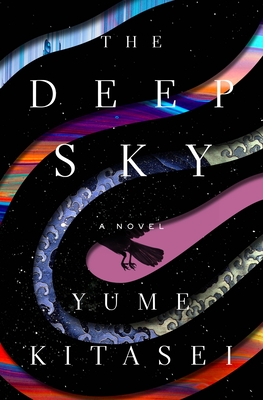
Asuka barely made the cut to be one of the 80 people sent to Planet X; humanity’s last hope before collapse. As an Alternate, she has no specialty training and instead fills whatever role is needed. That role turns out to be solving the mystery of who built and set off a bomb on the outside of the ship.
While all 80 people were trained in a rigorous, elite training facility before launch, they are still by and large young adults. Having slept through the first decade of travel, they were awoken to become pregnant before arriving at their destination, a full decade ahead of them. These young adults have only their DAR (Digitally Augmented Reality) to help communicate with the ship’s AI and a quantum communicator to communicate with Earth.
A war breaks out on Earth, which muddies the hierarchy of who is in charge back home while Asuka investigates her shipmates – her friends – as best she can.
This novel is wonderfully constructed. It’s basically a Locked Room Mystery set in space, so the list of suspects really isn’t that long. But these 80 people are trained to rely on one another, so who would build a bomb, and why? The answer surprised me, but in a good way. Once I reached the end, I understood why bird species were mentioned often. Not only because Asuka is a lover of birds but because the ship’s AI tried to work around protocols by presenting birds in Asuka’s DAR. The author wove this information into the narrative in a way that felt so natural that I was unaware that I was receiving clues.
The author also presented the dangers of DAR in a manner I hadn’t considered: what if that DAR was corrupted? Could you believe what you saw? Could you believe what the ship’s AI was telling you? Also, by each person having a customized DAR, each person was basically working alone. Sure, other people could be invited to view someone’s DAR surroundings, but if not invited, each person lived in a different world and saw the ship differently. At first I thought this DAR would help stave off madness because it would give the illusion of space and scenery that the person found soothing. As I read on, the horror of not being able to trust your senses became evident.
I enjoyed this novel from start to finish and look forward to the author writing another novel.




 Should Be Writing