This is a collection of short stories where the unifying thread is lack of connection, loneliness, and interacting with a commercialized world. Also, very meta in how the characters understand they are part of a fictional life.
The author has a flair for writing strangeness as if it were an everyday kind of reality, as if the character is able to walk into a TV show or game and interact with it as if it was real. The characters are also commonly lonely, or maladjusted in an inoffensive way. Having said that, there’s no pity for these characters. Perhaps because they know they aren’t the alpha, the most popular, or the best kind of person. That self-awareness makes it easier to identify with the characters.
The book is short, some stories only a few pages, and an easy read if you suspend your belief first.
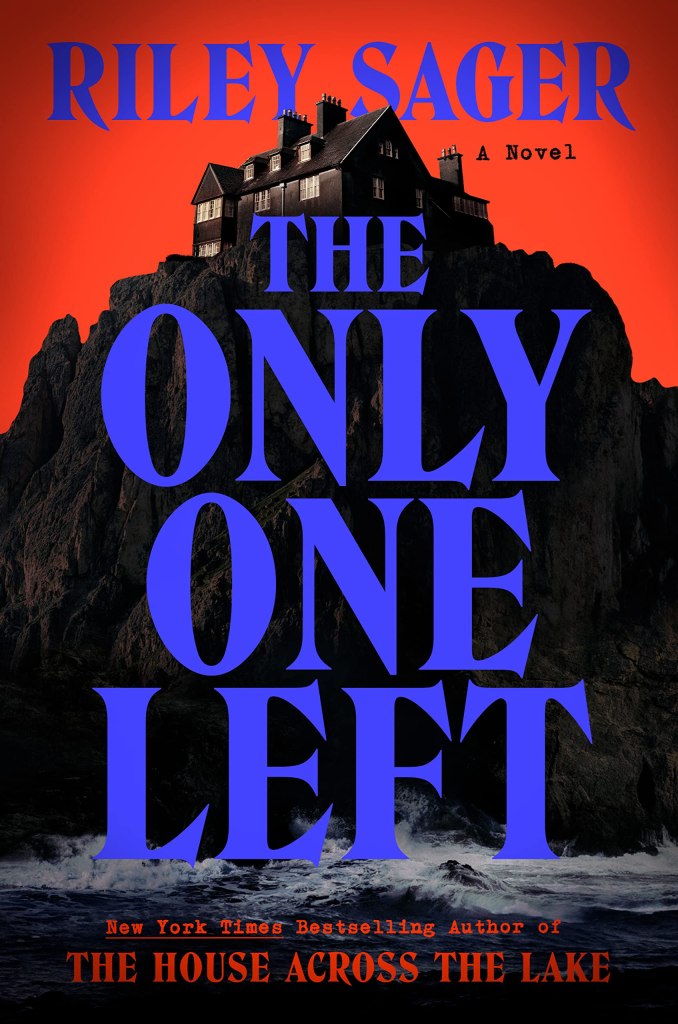
Kenzie and Gennaro accept a new client: a rich man who’s dying and wants to find his daughter. Kenzie’s mentor was looking for her, but now he’s gone missing too. The two detectives, flush with upfront cash, hunt for the daughter and uncover a cult in the process.
This is the third Kenzie and Gennaro novel.
I felt like this novel was clunkier than the past two. The characters are taking shape and the world is filling out nicely, but while reading I was constantly reminded that this book is a product of its time.
Published in 1997, the novel features beautiful women. One so beautiful that every man is blinded by her. Kenzie, of course, finds Gennaro more beautiful. All the women featured were described by their beauty, actually. The reader is reminded fairly often about Gennaro’s beauty and what effect her stunning looks have on Kenzie. Honestly, it was tiresome.
For that matter, so was the sardonic banter between characters. I didn’t feel like any character grew during the novel and that most of them had something sarcastic to say. After a while I just wanted some genuine emotion.
But what was most bothersome was when Gennaro stuck her tongue out at Kenzie as a mock fight. How infantilizing.
I’ll keep up with reading the whole series of Kenzie and Gennaro books, though. I remember the later ones were really good. Of course now I’m wondering if the novels will hold up to my memory.
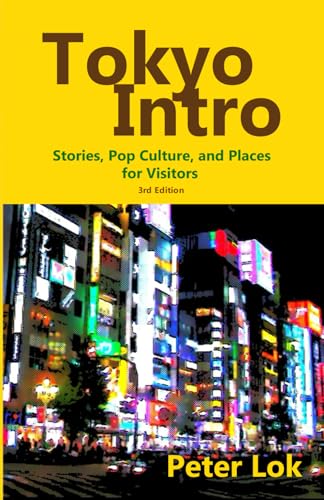
Tokyo is a massive city, housing 41 million people in the Greater Tokyo Area, compared to Canada which has 40 million people throughout the entire country. It would be impossible to see all of Tokyo on your visit, which is where this book comes in handy.
There is an attractions section broken down into ultra modern, modern, and traditional so you can better curate your experience and see what you want to see. Included are districts of interest and even how to get from one to the other using the extensive train system.
The book has a focus on pop culture and the author has a comprehensive list of themed cafes, shops, and districts that feature much of the anime culture, along with which shops and cafes are definitely worth checking out while you’re there.
Some of the views sound absolutely stunning, and the author does a great job of providing ideas of where to check out these views, including which buildings and floors have the best vantage points.
There’s lots of suggestions of where to find good quality food without breaking the bank, as well as the suggestion to check out a conveyor belt restaurant while you’re there.
Four short stories appear in the guidebook as well. These are both entertaining and informative as they help show how to get from one place to another. My favourite story involved helping a lost cat find its way home.
Tucked in the back is a fantastic list of souvenirs to consider bringing home. I’d consider buying another suitcase while you’re there so that you can bring your haul back home.
If I end up visiting Tokyo, I’ll be taking the book with me to help map out where I want to go and what I want to see while I’m there.
The author blogs about Tokyo – as well as Ramen noodle reviews – on his blog Tokyo Excess.
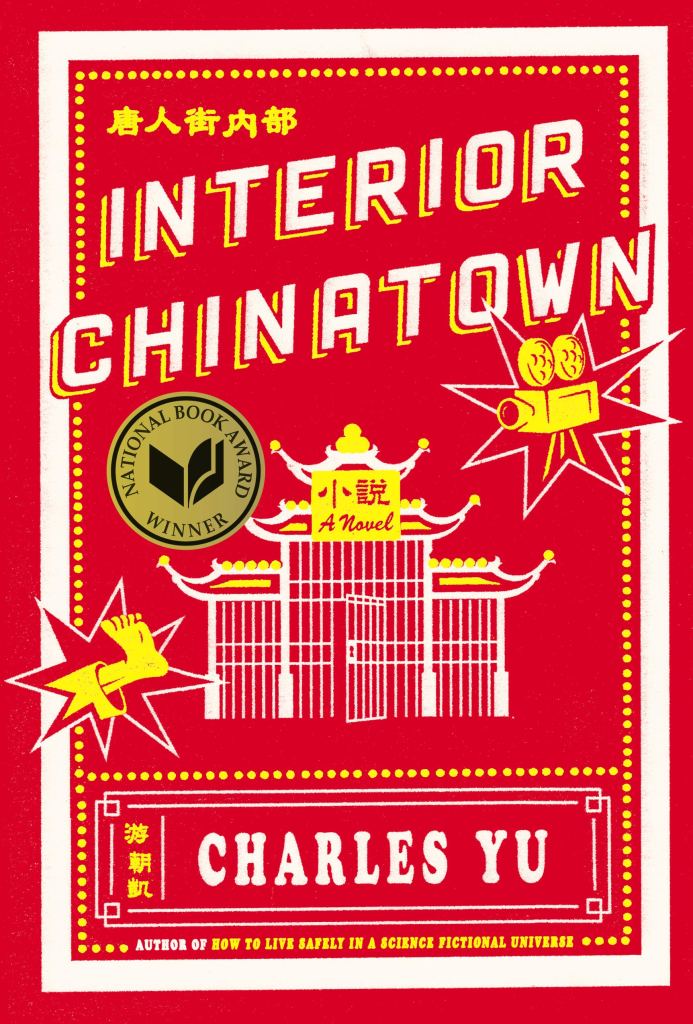
Willis Wu is a background actor on Black & White (a police procedural with a Black cop and a white cop) and strives to be more than just Generic Asian Man. Someday, maybe he’ll reach the top and become Kung Fu Guy, but first he must work his way up from Generic Asian Man #3, then #2, and finally #1. In between, he dies on screen, cannot act for six weeks, and provides the reader with some backstory about his parents and their struggles with fitting into their roles.
But this novel is more than that. It’s an unflinching gaze into what it must be like to be Asian in America; shoved to the sidelines and kept below a glass ceiling.
The story is told in screenplay format, which helps immerse the reader in the perpetual filming of the show while also demonstrating how the entire lives of the characters are defined by their roles on the show. This is both suffocating and illuminating.
This novel is clever, intriguing, and at its core, heartfelt.
There is a Netflix show of the same name based on the novel running at the time I’m writing this. While the show is entertaining on its own, the book has depth and a social message that I didn’t see in the show.
Grace is a woman in her seventies who is stuck in a rut. Once upon a time she was a wife and mother but lost both her husband and son, now she fills her days with the same routine, slowly fading into the background of life.
When she receives a letter informing her that she’d been left a property in Ibiza, Spain, she decides she might as well check it out. While she hadn’t seen the owner of the property, Christina, in decades, nor had she been close to Christina, the mystery of why this college friend would leave her a house was enough to disrupt her usual pattern of her day.
Grace has no idea that her entire world will be upended in the best possible way, nor that the simple act of diving could infuse her with life.
The author weaves a tale of supernatural abilities, kindness, grief, loneliness, and joy against a lively and vivid backdrop of Ibiza. The novel is told as a letter to a student, who reached out in a time of need, and is glorious in its complexity. Grace is a delightful character, one who softens as the pages go on, and who opens up to life’s experiences despite being attached to her grief.
The novel was one I’d love to relive, to experience again for the first time. Its tone is soft, its characters vivid, and the message of respect delightful.
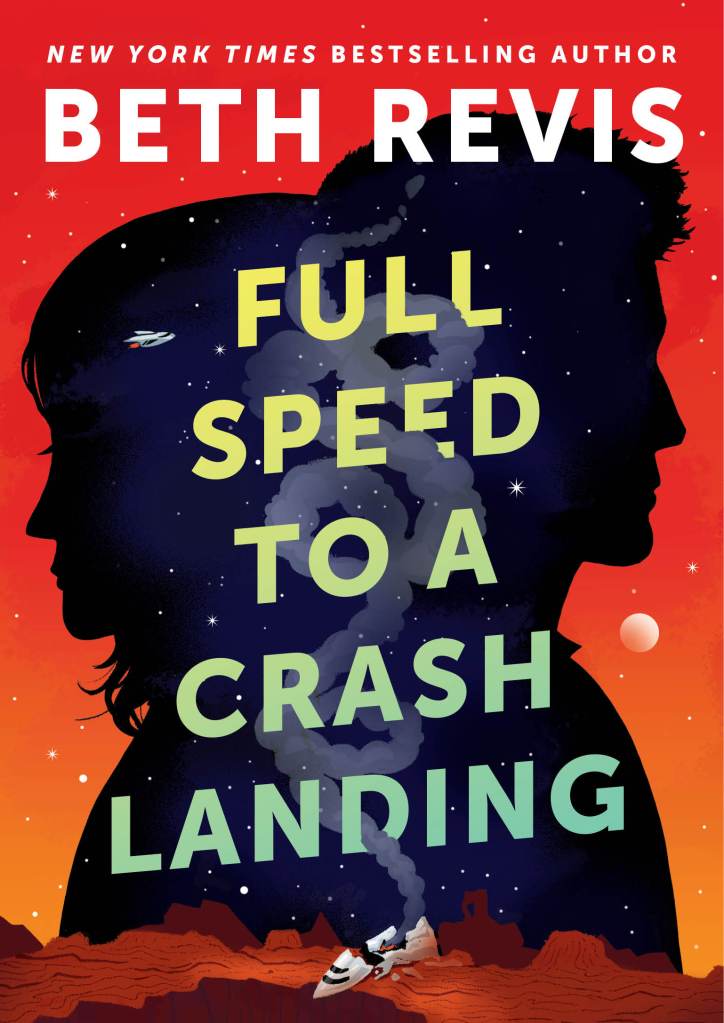
Ada Lamarr is running out of air. She sent a distress signal and knows there’s a huge vessel nearby but they took their sweet time answering. When they finally arrive, she’s barely alive and has to launch herself out of the giant hole in her ship, across empty space, and into her rescuer’s ship. She barely makes it.
Once there, she needs to explain why she was looting a ship that had crash landed on the nearby planet. Lamarr knows what’s on that ship and knows that her rescuer’s ship had no reason to be in the area except to also retrieve something from the downed ship.
What follows is a heist novella, where the author skilfully leaves clues that build to a massive cliffhanger ending.
While this was very well written – Lamarr’s character is vibrant and consistent – it’s frustrating to read a novella that ends so abruptly. The story is complete, yes, but also leaves room for sequels, sort of like Marvel movies and their after-credit scenes that give a taste of a future movie.
Still, the novella immediately gives the stakes and a sense of character and never slows down. It was entertaining enough for me to seek other work by the author.
Note: there’s a page of binary code near the end. I translated it: “This data has been compromised. This d1t1 has bee6 compromised. This data haromised. This data haromised.ised.ised.ised”
Kenzie and Gennaro are hired by a woman to watch her adult son. A photo of him was taken and he told her he’s being stalked by someone. While Kenzie and Gennaro can’t find any evidence of foul play, someone starts targeting the people Kenzie loves and some dark secrets about his family come to light.
This is the second novel in the Kenzie and Gennaro series and it’s better than the first one. The author develops the characters well in this novel. Gennaro’s husband Phil is shown trying to be a better person by quitting drinking and the childhood friendship of Phil and Kenzie feels robust and nostalgic. The relationship between Kenzie and Gennaro deepens as well, almost to the point of restarting a sexual ember.
Honestly, I would prefer not to have the will-they-won’t-they between the male and female lead characters. I find this tiresome and worn out. Having said that, this novel was written in 1996, so it’s kind of expected.
Overall, this novel is a giant step forward from the first book in the series. The author does a better job of setting the scene here, keeps the reader engaged by giving reminders of how the clues stacked up, and rounds the characters out well. I’m looking forward to reading the third in the series.
Four women; a biologist (the narrator), a psychologist, an anthropologist, and a surveyor, are sent into Area X as the twelfth expedition team. Their purpose is to map the area and make observations, all while trying not to be affected by the area itself. The biologist volunteered because her husband was part of the eleventh expedition.
The narrator gets infected very early on by inhaling spores and tries to cover it up. While she continues the investigation she learns that the psychologist is hypnotizing the three of them, that there had been more than eleven expedition teams before them, and that there’s some kind of life form deep underground.
While this novel was good, it felt incomplete. It’s the first in a trilogy, which might explain why the story is left dangling. The biologist is the only survivor of the expedition and she chooses not to return to the border, but instead to follow in her husband’s footsteps.
I found the dangling storyline frustrating. I wanted to know what the alien was, why it was there, when did it arrive, is it actually an alien, how drastically the biologist changes, and how those changes affected her. Maybe those answers are in the next few books.
In the story, the biologist encounters a massive pile of journals but doesn’t inform the reader of what she’s read, which is a pet peeve of mine. I wanted to know what was in those journals, how far back did they go, how many different people wrote in them, and why they were in a huge pile. I understand that this narrator is unreliable, but still, this was frustrating.
Overall the novel was good, it was an interesting peek into a mysterious zone, but irritatingly incomplete.
Jolene is an anxious person who hates her job and doesn’t make any attempt at being sociable with her coworkers. To deal with her hatred, she types nasty messages at the bottom of emails and changes the font to white. Except one day she forgets to change the font colour, is caught, and formally reprimanded. The reprimand includes restrictions on her computer, but the administrator makes a mistake and accidentally gives her admin access to all texts and emails. Now Jolene knows more about her coworkers, including how they feel about her.
The characters in the novel are rich, well developed, and believable. That kept me going throughout, especially when I felt like Jolene’s anxiety was laid a bit thick. The author did an excellent job revealing the source of Jolene’s anxiety and hatred, as well as slowly doling out bits of the other character’s backstories.
I wasn’t quite expecting the romance angle of the novel – Jolene has an instant attraction to the new HR guy Cliff – but it worked well.
Overall, the author’s narrative style made this an easy, interesting read, rich with sensory description and emotion.
This is a novel about a disintegrating marriage. Jane, an aspiring writer, meets John, a filmmaker and they hit it off immediately. There are some red flags, but that’s expected. Nobody is perfect, after all. But as the novel progresses it becomes clear that John is not what he seemed while dating. Nevertheless, Jane marries him and they have a child.
Jane takes over all of the domestic duties, putting her career on the back burner while John reaches for success. He starts companies and is fired from them. They move five times in seven years for his work, each move becoming more and more difficult for Jane.
While she sees that John isn’t helpful and is in fact a grown-up child that expects his wife to look after him, she doesn’t leave him. She speaks of leaving him later, after the child is older, but doesn’t take any steps to do so. Instead John is the one to leave, having began a relationship with someone else.
I found this frustrating. While I could identify with her quandary – it’s easier to stay than it is to leave – I think I would have preferred reading about how she left and the fallout of that decision instead of feeling like Jane was just tugged along through life.
Not naming the child in the novel is an odd choice. This made the child seem like a tangential part of the narrative, not an active participant, which keeps the character at a distance from the reader.
Overall the novel was a good read, but one I’m likely to forget over time, not remember.