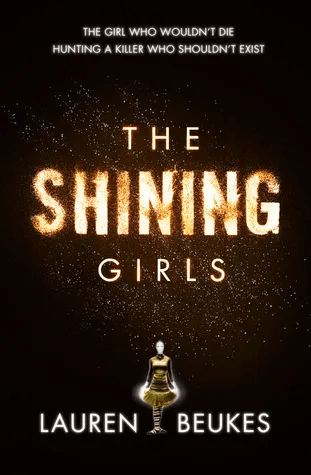
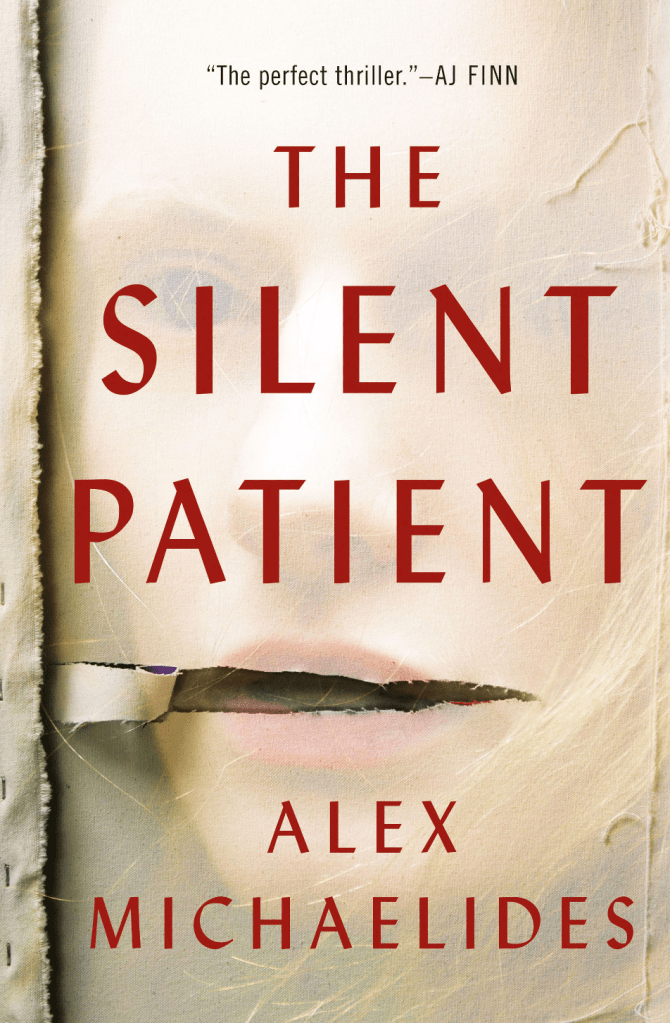
Lydia is a translator for a Logi, an alien species that has an embassy on Earth. The Logi communicate telepathically and only a small selection of humans can understand them. Lydia enjoys her job and has a good rapport with Fitz, her Logi employer, although translating for too long will give the effect of drunkenness in her. One night, after overdoing it with translating, Fitz is found dead in his study. Lydia lives in his residence and was the only one home. Too bad she can’t remember what happened, or even if she was the one who killed him.
The author does an excellent job of keeping the reader firmly implanted in the world. These Logi aliens are commonplace and accepted by most humans, which is reflected well in how Lydia interacts with Fitz and her social media. The world doesn’t feel too far into our future, which is a feat in and of itself. Glasses supply a constant feed of social media and recording the world around the wearer and scrolls offer another kind of access to the internet, social media, and recording yourself. Everyone is constantly being watched and potentially recorded and Lydia dealt with this in a way that felt believable.
The author also uses language to keep the reader firmly entrenched in the narrative. Words like ‘idee’, ‘veearr’, ‘ayaie’, and ‘enpeecees’ are used just like the acronyms are now and it makes sense that these acronyms would become words in the future.
The novel was engaging enough, but it’s a mystery that I doubt can be solved by the reader until the last bit of the book. The clue of how Lydia knows who the killer is doesn’t make sense to the reader until Lydia explains it at the end. Other than that, the book takes some odd twists and turns, which I found entertaining enough to consider seeking out the author’s other novels.
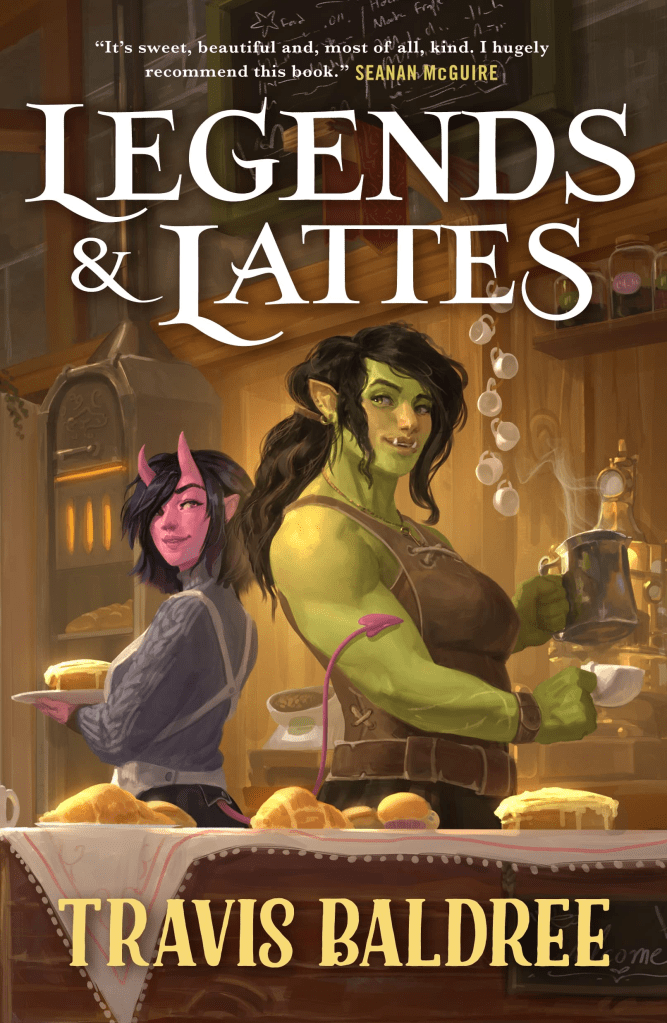
I don’t normally read a lot of fantasy, but the “high fantasy and low stakes” remark on the back cover caught my attention. I ended up loving this book so much that I wanted to crawl in between the pages and live there. The author’s narrative style was engaging and made for an easy read. My single and only complaint is that some scenes could use a little fleshing out. They felt a bit bare-boned in places and I craved just a tiny bit more padding between bits of action and dialogue.
The author did well in describing the different characters so I had an idea of what a hob or rattkin was despite my lack of fantasy background. I particularly enjoyed how the author presented each species as more than the expected criteria. Like the main character, Viv, is an orc but isn’t bloodthirsty and violent. Although she can and will wield a sword when needed. This was wonderfully refreshing.
There’s the teensiest bit of romance as well. Once Viv settles into running the shop she realizes she has warm feelings for Tandri, a succubus who has been helping with advertising and general management of the shop. These feelings don’t come to light until near the end and the author did a wonderful job in building their relationship so the warmth felt natural.
The stakes are, indeed, low. Viv opens a coffee shop in Thune after living a life slaying beasts and receiving bounty. She gets a hold of a Scalvert’s Stone, which the superstitious believe to have the ability to bring fortune and success. She buries the stone in her new shop and marvels at the wonderful people that come into her life. Cal the hob helps her renovate an old livery, Tandri the succubus helps her with advertising and running the shop, Thimble the rattkin becomes her baker, and a dire-cat comes and goes as she pleases.
Viv worries about the stone often enough that it never leaves the reader’s mind. An old party mate, Fennus, comes around to sniff it out, and the Madrigal’s group of thugs warn of payments needed to keep the peace.
These threats are present, but not the focus. The gentle pace of the novel created a soft world, one of delight and joy, with only enough stress to make the joy seem balanced.
The novel also featured a short story in the back, “Pages to Fill”, which gave some insight into the turning point for Viv. She’s in the midst of a quest when she decides she wants something more from life. More than beating people up, more than hunting down bounties, more than bloodshed. For me, it was like a last sip of the world before I had to let it go.
I recommend this novel to anyone who plays D&D, or perhaps would like a softer tone on monsters and mayhem.
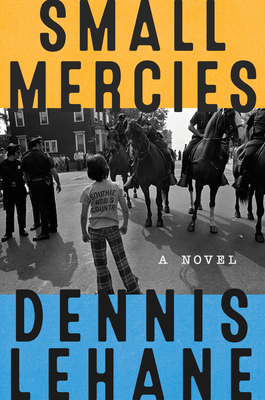
This novel is an unflinching dive into racism and vengeance in 1974 South Boston, just before the schools became desegregated.
Mary Pat’s daughter Jules is one of the white students from South Boston that will be bussed to the black school for her senior year. One night shortly before school starts, Jules goes out with friends and never comes home.
That same night, Auggie Williamson, a young Black man, is found dead in South Boston under mysterious circumstances.
While the two events seem unconnected at first, the author weaves them together expertly and immerses the reader in South Boston; a world where the neighbourhood is run by a crime family and loyalty is rewarded with being left alone, a world where the good and bad guys are not so clear cut.
Mary Pat investigates her daughter’s disappearance only to learn some horrible truths about Jules. She powers on, seeking vengeance, while beginning to question her own role in sowing seeds of hate.
As I read, I felt teleported into this world and all it’s grittiness and hatred, with hard-luck, low income residents. Not once did the narrative waver, not once did it shy away from the ugliness of racism, hate, and vengeance.
The novel is hard to stomach, hard to admit that this is our past, but brilliantly written all the same.
Trigger warning: the n-word appears often and while the context felt appropriate, readers may be offended.
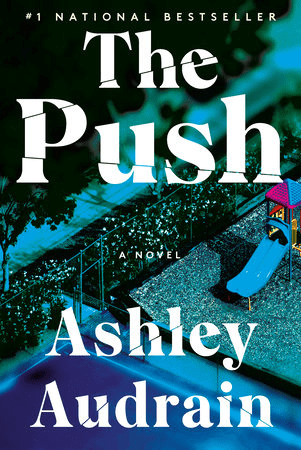
This novel is about motherhood, nature vs nurture, and generational trauma.
Told mostly from Blythe’s perspective – in second person no less! – we learn about how she never really wanted to be a mother, but chose to anyway. Her husband, Fox, put pressure on her to expand their family and since the marriage was going so well, she thought parenting would be fine.
Except that her mother left her when she was thirteen, and her grandmother took her own life when her mother was young. Neither woman wanted to be a mother, yet became pregnant anyway. They both tried to parent, to the best of their ability, but failed in the role.
Now Blythe has a daughter, a daughter that wants nothing to do with her pretty much since birth. When this girl, Violet, orchestrates the death of a toddler at a park, everyone thinks it was an accident. I mean, who would think a little girl could trip a toddler, coldly and deliberately, and cause his death? The relationship between Blythe and Violet remains strained and Fox brushes away all Blythe’s concerns, saying that Blythe simply needs to do better.
When Blythe becomes pregnant again, she has a son, Sam, that she loves dearly. All the love she should have felt for Violet is found in her relationship with Sam.
Until Violet pushes Sam’s stroller into traffic.
Again, nobody believes a little girl could do this. It was an accident, nothing more.
The marriage breaks up and Blythe tries to be a good mother to Violet, but the rift is too big to repair. Fox has moved on and has had another child with a new woman. Blythe worries that Violet will hurt this new child, but the mother brushes off concern, just like Fox did.
The novel is well written. Second person is remarkably hard but the author pulls it off beautifully. The strained parenting relationships are contrasted by a kind mother down the block, Mrs. Ellignton, taking Blythe under her wing when her mother leaves. While reading, the question of an unreliable narrator remained. Was Blythe really seeing Violet as a coldhearted person capable of murder? Or was Blythe seeing things that weren’t there? The final line of the novel answers those questions well enough.
It’s a good read, riveting in its horror, but definitely not for everyone.
I tend to read books without remembering why I put them on hold at the library. When I pick the book up I don’t read the inside flap. Instead, I just start reading and see how long it takes me to figure out what’s going on.
That said, I finished this book and didn’t really know what to think of it.
The meat of the story is that Neffy participates in a vaccine trial during a pandemic. Things go wrong fast, but she can’t really comprehend what’s happening as the first week after receiving the vaccine and virus are a slurry for her. When she finally is somewhat aware, she learns that four other people remained in the building with her. None of those four had received the vaccine or virus.
So I thought the book was about these four people learning to get along with limited supplies and an uncertain future outside the walls of the building. The pandemic is twofold: one part memory loss and the other part physical transformation (bloating, bruising) before ultimate death. Quick acting, the pandemic seems to have wiped out the entire population in under twenty-one days.
But then, without much warning, a new plotline developed. One of the participants brought along his new technology called the Revisitor. While using this device, people can go back into their memories and re-live them, simultaneously being their younger self and their current self.
This left me with questions immediately. Like, why did he bring this to the trials? Why wasn’t this technology widespread yet if it worked so well? What was the point of Neffy revisiting her old memories? Was this Revisitor a puzzle piece for the plot of surviving a pandemic?
Those questions were answered quickly, very near the end. I felt like I had to slog through a lot of memories, memories that ultimately don’t mean much to the plot of surviving a pandemic, to get answers.
This was bothersome for me. Not only were the memories not really needed for the plotline, they were basically backstory of Neffy’s life to date. None of this mattered, not really. This meant, for me, that the Revisitor was just a plot device to show how you can experience memories as a contrast to a pandemic about losing memory. Honestly, this felt forced. If Neffy was losing her memories this Revisitor might have had a better place, maybe saving her by reminding the brain of the pathways to memory and thereby circumventing the pandemic’s affects. But she wasn’t losing her memories and she survived anyway.
Another plotline crept up as backstory. Again, this didn’t fit well with the plot. Neffy, from the beginning, is writing letters to someone titled H. We find out quite far into the book that H is an octopus. She worked in an aquarium, had a degree in marine biology, and released this octopus into the ocean.
Was the author trying to show how Neffy’s kindness helped this octopus live its best life, therefore, Neffy’s kindness will help the four remaining humans live their best life? Or was the author showing how Neffy had an odd relationship with animals and therefore thought of them above humans? I was very confused as to why these letters were included, except to show even more of Neffy’s backstory.
The ending was also unsatisfying. I was left with more questions than answers. The last chapter, a single sentence, takes place fifty-four years after Neffy receives the vaccine and virus and has a character using the Revisitor. But why? To visit what memories? There are hints that civilization continued, but how would the technology persist after humanity was nearly wiped out?
On the bright side, the narrative drive was presented well enough to keep me reading. I wanted to know if Neffy would become addicted to the Revisitor and not help the other four, or go out and search for food even though she’d rather be steeping in memory.
I felt like the author had some good elements for a story – pandemic, new technology – but was presented clumsily.
Stephen King was the first author to show me what I call a ‘conversation style’ narrative drive. When reading his works I always felt like I was firmly inside the mind of the POV character, and that mind wasn’t a highbrow, highfalutin’ kind of person. Instead the perspective was more Regular Joe, albeit an oddball Regular Joe.
This radically different narrative drive was a refreshing change from what I was reading at the time. I felt like King had opened a door into a different kind of book, a more engaging and richer book, with strange goings-on to boot.
I cut my teeth on Christine, Pet Sematary, Cujo, and Carrie. This length of novels allowed me to really dig in to his characters and feel like I was given a secret door access into their minds. His longer works, like The Stand, drag a bit for me and his shorter works, his novellas, tend to shine in their brevity.
All that said, I purchased If It Bleeds at an airport so I’d have something to do if all my electronic devices failed me on a flight. It turned out none did, so I only got around to reading this book now.
I kept having to re-route my eyes, as they skipped over words and skimmed sentences. This isn’t normal for when I’m reading King. It’s almost like someone else wrote these stories. With that, here’s my impression of the four stories.
Mr. Harrigan’s Phone Craig lives in a small town with his dad. An extraordinarily wealthy man, Mr. Harrigan, moves into a big house on the hill. After hearing Craig recite some Bible passages in church, he hires him to read to him and water his plants.
They develop a kind of friendship. Mr. Harrigan gives Craig scratch-off tickets along with a card a few times a year. When one ticket pays a fair sum of money, Craig buys Mr. Harrigan an iPhone, one of the first iterations of it.
Mr. Harrigan dies and Craig slips the iPhone into his pocket. From there, the story has a King-ish twist, where Craig receives texts from that phone, but only after he calls it to hear his friend’s voice.
This is a story mostly about consequences and settling debts, but it was lacking a bit. The story was fine, the pacing fine, the characters fine, but I thought it was going to go somewhere else. Mr. Harrigan sees the wealth of information and asks the question of when, or who, will stem the flow. I thought the story would go there, but it didn’t, leaving that thread loose.
The story was okay. Not King’s best work, but okay.
The Life of Chuck Don’t we all think we’re the protagonist of our own stories? Or that we contain multitudes? Chuck wasn’t aware of it, but he was what kept the world alive.
This story is told backwards: act three, then act two, then act one. It was an interesting way to see Chuck’s life, what was important to him, and how he learned to let go and dance. Also, a haunted attic.
The story felt a bit forced though. Too many mentions of the scar on Chuck’s hand, maybe. Just trust the reader to be able to figure it out, no need to put so much focus on it. Overall it felt clumsier than I’d associate with King.
If It Bleeds This was the longest story in the collection, one that might push the boundary of novella length, and rather weak.
The story itself is fine. A private eye, Holly, realizes a news anchor could be a creature from her past. The same kind of creature that killed her colleague some years before. She investigates and discovers that she’s indeed correct.
I had three main problems with this story.
The first is that it was a semi-sequel to a novel, The Outsider. I hadn’t read the novel and wasn’t really familiar with the story, but I could pick up the clues: there was a shapeshifting monster that fed on fear and grief. The issue I had was with the overuse of references back to the novel. One or two, sure, I can get behind that. But it felt constant and after a while I wondered if an editor had read this work. I felt like if one had, about a quarter of the story would have been cut for repetition.
The second problem I had was with how the monster is defeated. This quote bothered me quite a lot:
“‘..how can you ever explain a dead guy at the bottom of the elevator shaft?’ Holly is remembering what happened to the other outsider. ‘I don’t think it will be an issue.‘”
Unless the reader has read The Outsider, how are they to know what happened to this outsider? I haven’t read it and so I was mystified. Bugs are mentioned a tiny bit later. Am I to assume the outsider turned into bugs? If so, will the bugs die? Live?
This was extremely frustrating.
The third problem was the mention, twice, of how one character had a defining trait of the outsider. Holly’s Uncle Henry could move fast, faster than he should have been able. Was he somehow infected by the outsider? If so, when and how?
Other than that, I felt the story took too long to get where it was going. I kept finding reasons to put the book down and ended up slogging through just to finish.
Rat This one was the best of the bunch and felt more like King’s writing than any other. I’d say he inserted himself in there – the main character is trying to write a novel and has writer’s block – but I’d also say that most of his writing has a slice of him somewhere.
In this story, Drew goes up to a family cabin to write a novel. Things go well, until they don’t, and he makes a deal with a rat. The pacing felt like King, the odd rat felt like King, and the resolution even felt like King.
Conclusion: overall, this collection felt limp. The horror and weirdness I associate with King simply wasn’t there. Or, perhaps, I’m a seasoned reader of his work and can no longer get the willies from reading it.
I’d seen the miniseries before I read the book so I had some idea of what to expect. Still, I was pleasantly surprised.
The primary character is Harper, a man who’s down on his luck in the early 1930s. He steals a coat with a key in the pocket and is inexplicably drawn to a shuttered, ramshackle house in Chicago. Inside, the house is luxurious, except for the body on the staircase. He can see the beauty because he has the key.
The secondary character is Kirby, a woman who is brutally attacked while walking her dog. Her attacker is Harper, who met her when she was a little girl, then again about two decades later.
An unexpected character is the House. It has a kind of interdimensional travel ability for the person with the key. Harper can think up a time, open the front door, and walk out into that time period. The House also calls to Harper to complete a circle of killings and leave a memento from a different time, and different murder, on the fresh body.
But what happens when the circle is complete? Harper desperately wants to know, he’s driven to completing the killings to ease the House’s invasion of his mind. But Kirby lives through her attempted murder, thus leaving the circle incomplete.
The author did a fabulous job in worldbuilding. Each time period felt wonderfully authentic. Even Harper’s reaction to the future was believable. Also, the author did a great job in completing the narrative circle and tying up loose ends. The body on the staircase is explained, eventually, and the ending brings the reader back to the beginning.
Where the author failed, though, is in solving the murders. The reader knows Harper committed the crimes but Kirby and a detective don’t ever find out what’s going on. Kirby almost does. She has an inkling that seems too farfetched to be real and is almost given the payoff of understanding and knowing how it all ties together, but not quite. So while the main story is tied up, the character’s searching is left open, which was frustrating.
Overall, the book is worth reading even after watching the series.
What happens to the children that come back from fantastical worlds? Well, they go to a special boarding school so they can be re-integrated into society.
Nancy is one such girl. Having recently returned from a Land of the Dead, she has no interest in bright colours, sunshine, or living people. Instead, she’d rather be with the Lord of the Dead again.
Except the doorway closed behind her and disappeared when she returned to this world, stranding her here. She, like all the students, wants to go back.
Just as she’s getting a handle on how the school works and that there are others that have visited different worlds, students start turning up dead and missing body parts. Now Nancy and her new friends must find out who is killing them and why.
This is a novella, only 169 pages long, and packs a wonderful punch about belonging, identity, and found family. A delightful read and an interesting take on doorways to other realms.
Alicia is an artist married to a photographer. On the surface, they have a great life together. That is, until Alicia is found standing next to her husband, who had been shot five times in the face. She refuses to speak from that point forward and is sent to a psychiatric facility in lieu of jail time.
Theo is a criminal psychotherapist who is overly interested in Alicia’s case. When a position at the facility opens up, Theo jumps on it in hopes of treating Alicia. His treatment is mostly successful. Alicia attacks him at first, but eventually opens up enough to talk. But what comes out of her mouth is lies.
The novel is told in flashbacks through Alicia’s diary and through the eyes of Theo. As a reader, I felt there was something off about Theo’s interest in her and his pushing to treat her. It turns out he’s an unreliable narrator, which the author pulls of brilliantly.
The twist near the end had me gasping out loud. Truly fantastic. I think I should have seen it coming but rather than try to predict what would happen I simply let myself get carried away with the story.
One nitpick is the author’s heavy references to Alcestis, the heroine of a Greek myth. While it’s relevant to the story, I grew weary of the references early on.
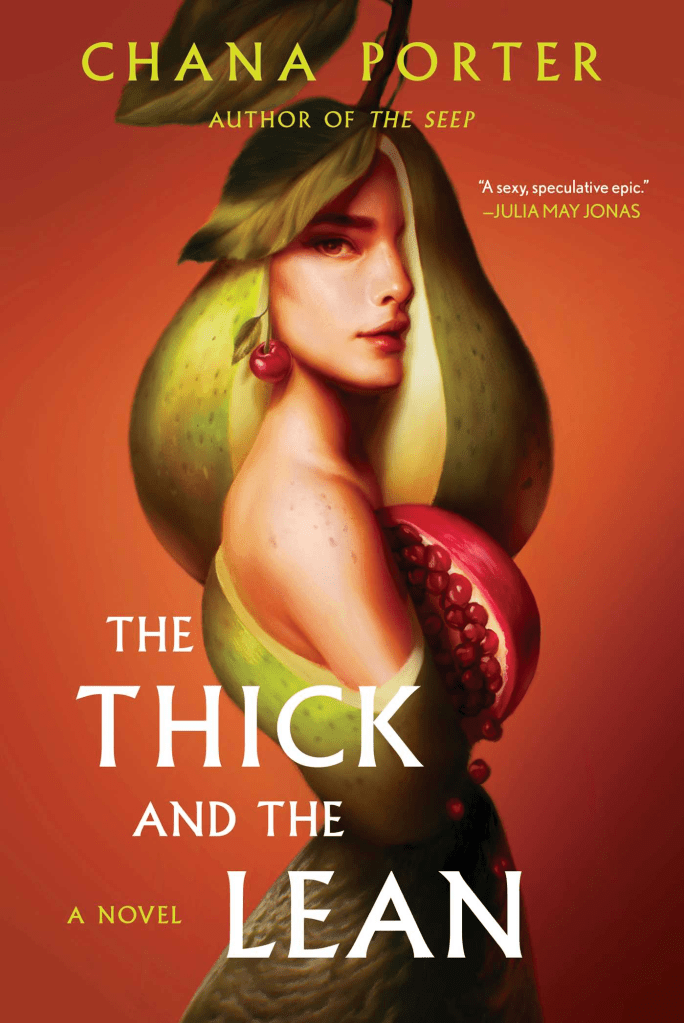
Beatrice hungers for luxurious foods, but her strict religious sect praises those that go hungry. She’s expected to take pills to suppress her appetite and stabilize her moods but chooses to avoid them. All she wants is to be a chef and prepare delicious meals for those who want to eat solid food, and to do this without shame. In a moment of vulnerability, she shares her desire with her girlfriend, who rips her recipe book and heart to shreds. Beatrice runs away that very night, to a woman who gave her the freedom to copy recipes from books surreptitiously. That woman helps her escape the cult and train to be a chef.
Reiko is from one of the poorest sections of the city, the Bastion. She receives a scholarship to an expensive school, where she can study skills to make her marketable. Her computer engineering skills are particularly good and she decides this will be her career path. Her grades are stellar, but the school pulls her scholarship, leaving her with either a mountain of debt or going home in shame. She chooses to use her skills to skim money from her rich roommate. From there, she steals her way higher and higher up in society.
Both women get their hands on a forbidden book: The Kitchen Girl. This book is the basis for the Flesh Martyr religion and forbidden because the ideas have been bastardized into people starving themselves to be closer to God.
While both women lead remarkably different lives, they cross paths and bond over the book.
The author’s narrative style is sumptuous, describing rich foods and fine clothes in such a way that I could taste and feel them. I loved the author’s first book, The Seep, and am thrilled that this book is equally good, if not better.
The worldbuilding is incredible and beautifully woven into the story. The author takes dieting to an extreme, demonstrates the difference between the wealthiest class and the poorest, and ties everything together with a theme of nourishment, finding oneself, and societal expectations based on class.
I loved this novel so much I’d read it again, just to immerse myself in the world for a while longer.




 Should Be Writing