In the near future, people could have an upload: a digital entity composed of the same memories as the human tether. These uploads are able to intensify memories, make them more solid should the human choose to revisit them. Some of the uploads request emancipation from their tethers as well.
Anna is grieving the sudden death of her teenage son, Alex, when she releases her upload. Cathy is teaching personhood at a local university and allows this upload to attach to her. Sam was Alex’s friend and saw him die. Aviva is the upload struggling to make sense of the world.
At its core, this novel is about grief with a science fiction environment. There are hints to dystopia – like retirement homes not having any human staff – but the focus is on Anna’s upload and how it evolved to be what it was.
While I enjoyed the book immensely, the narrative style was wonderful and the characters properly rounded out, I was disappointed with the science fiction element. I ended up with more questions than answers like, was Alex’s neurospiciness caused by the upload somehow? Why did Anna allow her upload to develop a relationship with her son? Why didn’t Cathy just get her own upload instead of going to extremes to attract one? It’s possible some of these questions were answered in the novel and I somehow missed them, which is frustrating. Also, why would an upload want emancipation? If the upload is simply an AI, why would it have feelings and desires?
Interesting concept, but the execution could use some work.
Detective Maritza Smith gets a call from Rose House – an AI-infused house – informing her of a body inside, dutifully fulfilling the duty-of-care directive of notifying the authorities of a deceased person within the house.
Except the house’s creator has already passed and is currently a diamond sitting on a plinth inside the house, and the only person who the AI will allow inside is in Turkey, nowhere near the Mojave Desert.
Detective Smith needs to figure out how the deceased got inside while also trying to get inside herself.
The novella didn’t quite tie up the loose ends in a way I’d prefer. The plot is complete; of how Smith gains entry, what she sees, and how the person died in there, but the story is left open-ended. Smith ends up leaving with some valuable tech, but does she use it or not?
AI houses are common in this universe. Or at least, houses with embedded AI. But Rose House is different, it’s more sophisticated. The deceased wanted to take the code and use it to create a city, buy why? Why would humans want to have buildings operated or infused with AI?
Anyway, the novella is well written and engaging, it’s also a peek into a near-future dystopia that I’m not sure I’d like to live in.
Mal is a sentient, free AI observing the world through the infospace and hopping into other, non-sentient AIs whenever the mood suits him. He encounters an augmented human and decides to ride it for a while, just to see what it’s like, no intention to puppet the human or anything, and starts off on an adventure that widens his horizons and teaches him about friendship.
The plot is loose, definitely character-driven, and follows Mal as he hops from one place to another, mostly into the augments of his new human friend. The author has a flair for making Mal seem humorous and likeable. There’s a war going on in the background between Humanists – people who want to keep humans un-augmented – and Federals, I think. Honestly, I didn’t pay a great deal of attention to that part of the plot. There was another faction, the sentient AIs as well. Mal does what he can to help his newfound friends while still seeming selfish.
Overall, the novel was entertaining enough. There were parts that dragged on, like when Mal described taking over an AI like a castle attack, but those parts were few and far between.
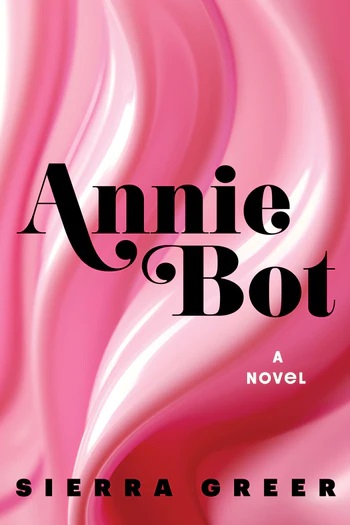
Annie is a lifelike bot, a Stella, made for cleaning. Her owner Doug changes her settings to become a Cuddle Bunny and turns on autodidactic mode so she can learn. Her main goal is to please Doug, usually through sex thanks to Cuddle Bunny settings, but the more experiences she has, the more confused she becomes about the difference between what her settings are making her do and what she wants to do on her own.
Doug is an abuser, albeit a gentle one. He’s controlling about what Annie wears, alters her body without her consent, doesn’t allow her to leave the apartment, and restricts her access to the internet. All of this is presented to Annie as ways to please him, and since she’s hardwired to do just that, she keeps her displeasure to herself and elevates his needs and wants above her own. When his friend Roland comes over and tells her that having sex with him without Doug’s knowledge, and learning to code, these secrets will make her more human. Annie agrees and as time wears on, she develops the ability to make more complex reasoning choices to keep up the lies, therefore increasing her development by leaps and bounds.
Stella Handy, the company who sells and maintains the bots, notices how far Annie has come in cognitive development. They offer Doug larger and larger sums of money for copies of her Central Intelligence Unit, eventually he accepts.
But Doug finds out about Annie’s lie just before he was about to take her on a trip to Las Vegas. He decides to leave her at home. Annie recognizes how angry he is and takes the opportunity to leave, because her fear of the unknown world is less than her fear of what Doug will do to her when he gets home.
This novel is beautifully crafted. The reader has some sympathy for Doug as he’s not terribly abusive at first. He owns a bot that he uses for sex and treats fairly well at first. He seems generous in allowing her to expand her cognitive abilities. But his own insecurities about having a relationship with a bot become more and more clear as he becomes more and more controlling.
This dynamic offers up a moral or ethical question of how bots would or should be treated. Made for sex and for pleasing their owners, it’s not too far out of the range of possibility that the owner would select clothing for them, demand their body be a certain shape, and expect the bot to be available for companionship at a moment’s notice.
But having a bot develop cognitive abilities, a personality that includes desires outside of what the owner suggests, creates the issue of where to draw the line in treatment. At what point does the bot become cognizant enough to be on their own in society and not be owned by a human?
In addition, this novel is a wonderful allegory about the relationship between an abuser and a naive, adult person.
I enjoyed this novel immensely and look forward to more work by the author.
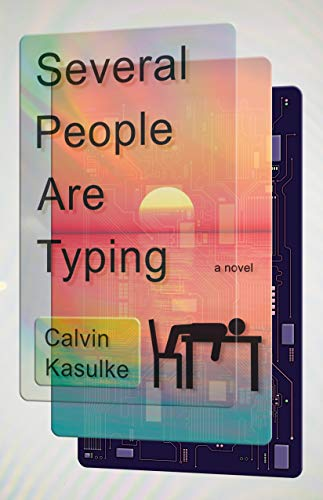
Gerald is looking at a spreadsheet when he gets sucked into Slack. It takes a while for him to convince his workplace friend to believe him, then go check on him. Even after Pradeep finds him, the rest of the office doesn’t really believe he’s in there. Instead they think this is just some elaborate overuse of the company’s new work from home policy.
While that’s happening, another coworker complains of constant howling. She goes missing and it’s like she was never there. Only one other person interacts with her so the question becomes, did she really exist?
Okay, this book is delightfully weird. The entire thing is written out as Slack conversations, including emoticons. The plot is simple and the execution interesting. This is a delightfully refreshing read.
Where oh where did I get this image? Goodreads.com!
This is the creepiest, most sinister book I’ve read in a while.
I’ve read a lot of suspense and horror in my day, but nothing gripped me and held me like this book did.
A visitor arrives on Junior and Hen’s farm and tells them that Junior is longlisted to go to the Installation. That this won’t happen immediately, but to be prepared when it does. A couple of years pass and the visitor, Terrance, appears again, saying the trip to the Installation is imminent. Terrance says he must live with them, to get to know Junior so he may create a copy of Junior for Hen to live with while he’s away.
This book sets the stage immediately. It’s obvious that something is wrong because Junior’s dialogue has no quotation marks and Junior never asks what the Installation is, how he ‘won’ a place there, or whether it’s a choice that he go.
Brilliant storytelling. Fantastic, tight dialogue. Every word has a purpose, every word pulls the story along, every bit is relevant. There is no extraneous information, there’s no draggy parts to the novel, there creepiness and suspense never drops.
I strongly recommend this book to anyone who likes books that stick with you after the last page. I definitely want to re-read this, now that I know how it ends.
GIGANTIC SPOILER SECTION: I mean, I warned you in the title. But here we go, here’s my explanation of what happened in the novel.
Terrance arrives in a black car with green headlights. The green signals Junior to ‘wake up’. Junior isn’t human, he’s an AI living with Hen on a farm while the real Junior is off at the Installation. Terrance talks to the couple as a perfunctory measure, just enough to explain the visit, then leaves.
Junior asks some questions, mostly in his head, but doesn’t challenge anything. He simply accepts what Terrance says and makes an effort to live his life. Hen is aloof and standoffish at first, which Junior waves away as stress from the idea that he’ll be going to the Installation soon.
Hen lives with this version of Junior because she must, not because she was given a choice. Or at least, not a choice that she made willingly. This Junior is here, therefore, she must exist with him but she doesn’t have to like it. She keeps distant from him but does as he requests.
An example of this is the piano. She used to play a lot, but doesn’t much anymore. Junior suggests that she play because in his mind she loves to play. But later she tells him that she actually doesn’t like playing which is why she doesn’t do it much anymore. Junior excuses her minor outburst as her being out-of-sorts and of course she’ll want to play the piano later.
Terrance returns after a couple of years and says that because Junior is leaving soon, he’ll stay with them both and observe them. His reasoning is that if he observes Junior, he can give Hen a replica of Junior for when he goes to the Installation.
But the more Terrance is around, the more he talks to Hen. The reader isn’t given insight into what the conversations are about, but Junior becomes more and more antsy about them.
Then Junior arrives. The Junior that we know gets upset and says he’s the original. But this new Junior has quotation marks around his dialogue and refers to the other Junior as ‘it’. The first Junior leaves and the second Junior stays
The second Junior is immediately irritated with how Hen behaves. She doesn’t seem as attentive to him, not like her usual self. One day he goes into the kitchen and finds a note with his name on it. The note is blank.
Terrance arrives in the car with the green lights. Hen’s dialogue doesn’t have quotation marks and she’s much more attentive to Junior. I think Hen has been replaced by an AI and this Junior doesn’t notice.
They’re both living in a simulation. The entire farm property is a well-designed, immersive, VR simulation. But the people with dialogue are real. The bugs that appear in the story are a physical manifestation of bugs in the programming.
Yes, this image is once again taken from Goodreads.com
This is another book I read without remembering what it was about or refreshing my memory by reading the jacket flap. I ended up enjoying it quite a lot.
The story is told through the eyes of Klara, an AF (Artificial Friend). This is done so well that after a few pages I could hear her contented tone in every word. She’s obviously programmed to be helpful, kind, polite, and content and that’s reflected in her attitude throughout.
Klara is also programmed, I think, to worship the Sun. This is in part because she recharges using solar power, but somehow comes across as a religious belief. She frequently refers to sunlight as the Sun’s nourishment and she believes it to be a cure-all. Later in the book, Klara decides to ask the Sun to help Josie, the teenager who chose her, to be well. Klara decides that a sacrifice must be made for this to happen, this sacrifice being the disablement of a pollution machine. As a reader, I could see why this wouldn’t work, but to Klara, this absolutely would. She freely donates some of her cerebellum fluid to disable the machine, at the suggestion of Josie’s father. Again, as a reader I could see the father was manipulating her a bit, but she was intent on stopping the machine so she agreed to have the fluid drained.
Oddly, the sacrifice worked. Josie got better.
Better from what is only somewhat clear. Children are lifted, I assumed genetically, to be more intelligent. This lifting caused Josie’s illness. Because everything is from Klara’s pov, the illness is never really explained. Late in the book it’s revealed that Klara’s purpose is to accept an upload of Josie, should Josie die.
Klara stays with Josie even long after Josie no longer has the time or room for her. Josie promised her early on that she would never put her in a closet, but once Josie has other friends, Klara finds a utility closet all on her own and stands in there to be out of the way. After Josie goes to college, Klara lives in the Yard, which is clearly a junkyard. But she never complains, never finds fault with her situation. She’s just pleased to be of assistance.
There’s a background story too, one of the rise of AIs and people’s general paranoia of them, but it’s not explored in depth because Klara’s concerns are with Josie, not the surrounding world.
Information is revealed to the reader by dialogue that Klara both participates in and overhears. I must say, this is where the book faltered for me. Klara’s dialogue was excellent, her voice clear and interesting, but every other character said things in a manner I found false. It was clear to me that the author was just trying to convey information, which annoyed me a bit.
Overall though, I enjoyed this book. Klara is a gentle protagonist and while treatment of her was not always kind, her responses were polite. I’d recommend this book for people that enjoy a different pov and are okay with not knowing the details of the world building.




 Should Be Writing