Kenzie and Gennaro are hired by a woman to watch her adult son. A photo of him was taken and he told her he’s being stalked by someone. While Kenzie and Gennaro can’t find any evidence of foul play, someone starts targeting the people Kenzie loves and some dark secrets about his family come to light.
This is the second novel in the Kenzie and Gennaro series and it’s better than the first one. The author develops the characters well in this novel. Gennaro’s husband Phil is shown trying to be a better person by quitting drinking and the childhood friendship of Phil and Kenzie feels robust and nostalgic. The relationship between Kenzie and Gennaro deepens as well, almost to the point of restarting a sexual ember.
Honestly, I would prefer not to have the will-they-won’t-they between the male and female lead characters. I find this tiresome and worn out. Having said that, this novel was written in 1996, so it’s kind of expected.
Overall, this novel is a giant step forward from the first book in the series. The author does a better job of setting the scene here, keeps the reader engaged by giving reminders of how the clues stacked up, and rounds the characters out well. I’m looking forward to reading the third in the series.
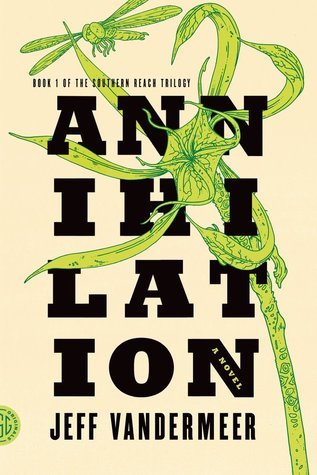
Four women; a biologist (the narrator), a psychologist, an anthropologist, and a surveyor, are sent into Area X as the twelfth expedition team. Their purpose is to map the area and make observations, all while trying not to be affected by the area itself. The biologist volunteered because her husband was part of the eleventh expedition.
The narrator gets infected very early on by inhaling spores and tries to cover it up. While she continues the investigation she learns that the psychologist is hypnotizing the three of them, that there had been more than eleven expedition teams before them, and that there’s some kind of life form deep underground.
While this novel was good, it felt incomplete. It’s the first in a trilogy, which might explain why the story is left dangling. The biologist is the only survivor of the expedition and she chooses not to return to the border, but instead to follow in her husband’s footsteps.
I found the dangling storyline frustrating. I wanted to know what the alien was, why it was there, when did it arrive, is it actually an alien, how drastically the biologist changes, and how those changes affected her. Maybe those answers are in the next few books.
In the story, the biologist encounters a massive pile of journals but doesn’t inform the reader of what she’s read, which is a pet peeve of mine. I wanted to know what was in those journals, how far back did they go, how many different people wrote in them, and why they were in a huge pile. I understand that this narrator is unreliable, but still, this was frustrating.
Overall the novel was good, it was an interesting peek into a mysterious zone, but irritatingly incomplete.
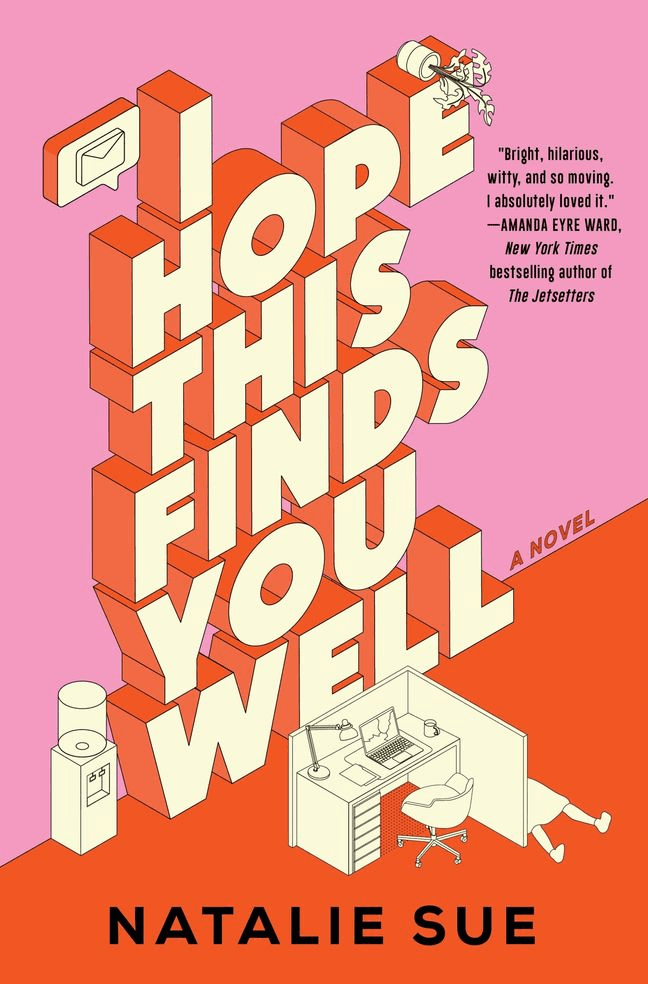
Jolene is an anxious person who hates her job and doesn’t make any attempt at being sociable with her coworkers. To deal with her hatred, she types nasty messages at the bottom of emails and changes the font to white. Except one day she forgets to change the font colour, is caught, and formally reprimanded. The reprimand includes restrictions on her computer, but the administrator makes a mistake and accidentally gives her admin access to all texts and emails. Now Jolene knows more about her coworkers, including how they feel about her.
The characters in the novel are rich, well developed, and believable. That kept me going throughout, especially when I felt like Jolene’s anxiety was laid a bit thick. The author did an excellent job revealing the source of Jolene’s anxiety and hatred, as well as slowly doling out bits of the other character’s backstories.
I wasn’t quite expecting the romance angle of the novel – Jolene has an instant attraction to the new HR guy Cliff – but it worked well.
Overall, the author’s narrative style made this an easy, interesting read, rich with sensory description and emotion.
This is a novel about a disintegrating marriage. Jane, an aspiring writer, meets John, a filmmaker and they hit it off immediately. There are some red flags, but that’s expected. Nobody is perfect, after all. But as the novel progresses it becomes clear that John is not what he seemed while dating. Nevertheless, Jane marries him and they have a child.
Jane takes over all of the domestic duties, putting her career on the back burner while John reaches for success. He starts companies and is fired from them. They move five times in seven years for his work, each move becoming more and more difficult for Jane.
While she sees that John isn’t helpful and is in fact a grown-up child that expects his wife to look after him, she doesn’t leave him. She speaks of leaving him later, after the child is older, but doesn’t take any steps to do so. Instead John is the one to leave, having began a relationship with someone else.
I found this frustrating. While I could identify with her quandary – it’s easier to stay than it is to leave – I think I would have preferred reading about how she left and the fallout of that decision instead of feeling like Jane was just tugged along through life.
Not naming the child in the novel is an odd choice. This made the child seem like a tangential part of the narrative, not an active participant, which keeps the character at a distance from the reader.
Overall the novel was a good read, but one I’m likely to forget over time, not remember.
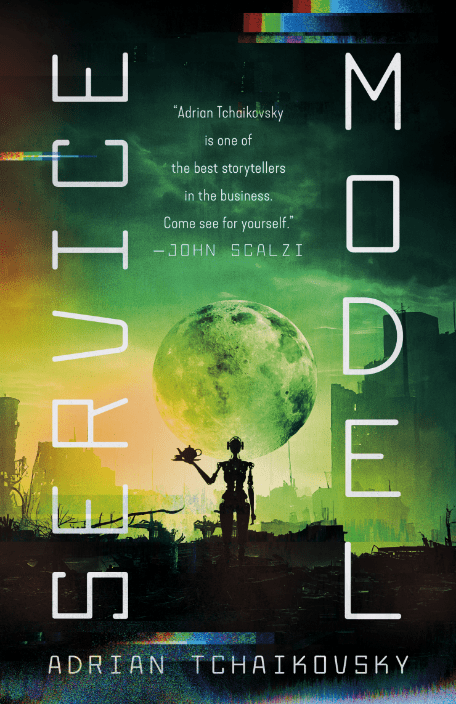
Charles is a robot valet, created to serve the upper crust of society. When he murders his Master, he’s mystified as to why, having found no motivation for his actions in his records. Since Master is dead, Charles reports to Diagnostics to try to suss out the problem. There, he finds and strange robot called The Wonk and embarks on a journey of self-discovery in a world where humanity has fallen away and rendered valets obsolete.
The novel is wonderfully written and the reader is firmly anchored in Charles’ point of view throughout. Charles’ logic and reasoning make sense, and the author helpfully gives the reader a step-by-step analysis of most of his decisions.
My problem was that my focus was on a different aspect of the story. When Charles leaves the manor and begins to walk to Diagnostics, he observes the world around him, a world that’s crumbling. Other manors appear to have fallen into disrepair and Charles doesn’t encounter another human for quite some time. I wanted to know what befell the world, what caused this ruin?
That question is answered at the end but to get there I had to drag through a lot of material that was only somewhat interesting.
The book is divided into five parts with titles that eluded me. I looked them up and understood that each part was an homage to an author, specifically: Part I KR15-T: Agatha Christie Part II K4fk-R: Franz Kafka Part III 4w-L: George Orwell Part IV 80rh-5: Jorge Luis Borges Part V D4nt-A: Dante Alighieri I haven’t read some of those authors and didn’t recognize the homage, but it’s a cool Easter egg for other readers. I did see the Wizard of Oz reference at the end, though.
So while some parts of this novel flew right over my head, the work itself was an interesting commentary on how our society could lead us into ruin.
May, recently unemployed, chooses to undergo a procedure to subtly alter her face so it wouldn’t be recognizable by AI. The compensation she receives is enough for her to purchase a three night stay in the Botanical Garden, the only greenery in the city, for her family. But while luxuriating in the glory of a forested area, her children go missing.
I tore through this novel and read it in two sittings.
Technology is presented beautifully, as both helpful and harmful. Children have bunnies attached to their wrists that monitor their heartbeats and location while also providing them with access to the internet. People have woombs, large egg-shaped structures where they can sit inside and be surrounded by whatever images suit them. Hums are robots, designed to be helpful to humans. Ads are constant and invasive.
Near the beginning, May takes the bunnies off her children’s wrists as a way of forcing them to exist in the real world and experiencing all that Botanical Gardens has to offer. She demands that she and her husband Jem leave their phones behind as well. But without this tech, they have to use a paper map to navigate the area and are out of touch with the world.
This becomes a problem when Jem and May fall asleep while the kids run up and down a waterfall area. With no bunnies, her children cannot be located easily by a helpful hum. Instead, the hum must access public feeds to locate the children. In doing so, the hum records May’s reaction to everything, which becomes a viral video.
Child Services gets involved, with a hum sent to observe the family. May panics, of course, that her children will be taken from her.
It’s easy to identify with May and her choice to remove the kids’ bunnies, many parents don’t want their children immersed in the internet all the time, but also the fallout and misunderstanding of peoples’ reactions to the viral video. In it, May is presented as anti-bunny, which she’s not, and parents everywhere condemn her.
The ending confused me, though. The hum tells May that the investigation concluded and her children would stay with her. Then the hum tells her to go to her woom to see the portrait it made for her, a portrait that absolved her of the investigation. Inside her woom, she saw herself undergoing the procedure to change her face, which, it turned out, was to train AI on distinguishing the differences not become unrecognizable as advertised. But how did this portrait absolve her?
Despite that, I enjoyed the book and its look into a dystopian, near-future world where capitalism has run rampant.
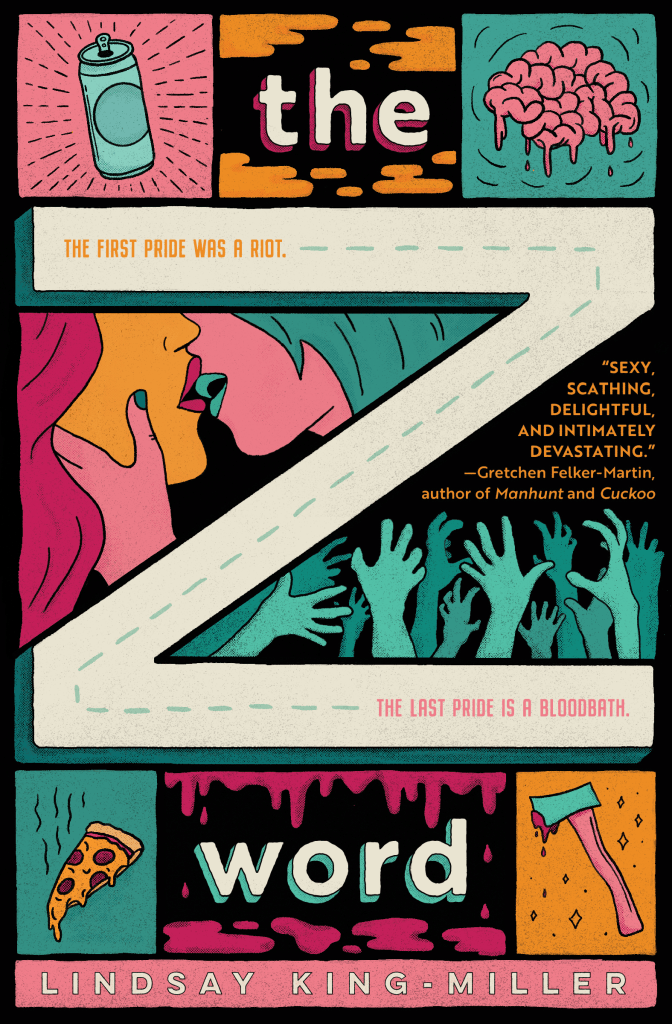
A hard seltzer company sponsors Pride with devastating results.
Wendy is at the first of many potential parties to kick off Pride when violence breaks out. To make matters worse, her ex is at the party with a new girlfriend.
This book was okay. Not spectacular, not horrible. It was a lighthearted romp through a zombie apocalypse with an LGBTQ+ found family. I predicted how the zombies were created early on, which I felt was obvious and a bit frustrating that the main character didn’t figure it out just as fast.
The characters were a bit stereotypical, which was disappointing.
There’s fairly graphic sex in the novel. Wendy has sex with two characters, both times she reaches the point of orgasm without actually having one. I don’t know if the author was trying to frustrate readers or what, but it was annoying. I’m also not a fan of having a sex scene right next to a gory, violent scene. It seems wrong to ignite passion in a reader only to present them with violence.
Overall the book was all right. It was a quick read, entertaining enough, but not stellar.
If you’re a fan of Choose Your Own Adventure, this is the book for you.
Marsh is unhappy with how her life turned out. She was on track to become a lawyer when she got pregnant. While she never regretted having her daughter, she did regret not finishing law school to become a high-powered lawyer.
A new technology has been invented: the personal quantum bubble. This tech was tested on a reality TV show called All This and More, where the contestant could make any change – big or small – to her life. This show was an instant hit, with more viewers glued to their screens than any other broadcast ever. Season one was such a huge hit that season two was announced.
But season two hit a snag and stopped production halfway through. Much later, season three began with Marsh as the contestant.
At first, Marsh is hesitant to make choices, but that hesitation falls away fast. Marsh grows more and more confident and takes bigger and bigger risks to have the perfect life. Glitches start to appear, like an ex-boyfriend appearing where her husband should be, and the word ‘Chrysalis’ shows up in every iteration of the bubble’s creations.
Marsh soon suspects something is very wrong with the bubble, but her producer and the bubble itself seem to be obstructing her from finding out the truth.
This novel is set up as a Choose Your Own Adventure, with big choices being made just prior to the next TV episode. The reader gets to choose what Marsh does next for each episode. The novel can be read linearly or the reader can flip back and forth in CYOA style. I did both, making sure I read every choice, just to see if everything gets covered (yes, it does, which is very satisfying). There are three possible endings as well, each one ending with a choice to read the Acknowledgements page or the About Author page, which was a nice way of keeping the consistency of the novel and making sure the reader knew that was the very end.
Overall, the novel was wildly entertaining. Marsh starts out hesitant and frightened of choosing and ends confident and able to decide what she wants. I admire the author for being able to pull this off – for being able to create timelines that are both consistent and coherent while being very different. Assembling the novel must have been a feat in and of itself.
I loved the author’s first work, The Book of M, and disliked the second one, Cartographers, so I went into I All This & More with a wary eye, but it turned out that I was glued to the pages throughout.
Once upon a time, curling up with a book by this author was like spending an evening with an old, twisted friend. I’ve loved many books by King and was looking forward to this collection of short stories.
I was disappointed.
The stories weren’t dark, twisted, or weird. They had elements of weirdness to them, hints of supernatural elements in some, but none of the stories were particularly creepy or strange. It’s like the author wrote a bunch of drafts for stories but didn’t bother to round them out.
The endings felt rushed, too. One story in particular, Danny Coughlin’s Bad Dream, had an ending that felt cobbled together, like the author didn’t know how to wrap it up so he just threw together some stuff and called it done. I honestly think I could have come up with a creepier ending.
I’m accustomed to his characters being faceted and interesting to read, but these characters were forgettable. King used to put the reader right into the mind of the characters, right from the get-go. But here, he told the reader most of the information as if to just hurry up and get the story written. I admit, it’s been a long time since I’ve read Christine, Cujo, or The Shining, so maybe my memory has inflated his work. Or, maybe, he’s just not as good at telling stories as he used to be.
This is a little book, no more than 177 pages and formatted to almost postcard size. Like a bite-sized novel.
The story is told in the point of view of the wife, referred to as “the wife”, and snippets, like tiny journal entries. It chronicles the woman’s life from shortly before meeting her husband to the dissolution of their marriage. They endure several trials of life, like a colicky baby, bedbugs, and career shifts, which help define their relationship.
This novel reads as musings on life, art, and love, with tenderness, rage, and wit.