This is a collection of short stories where the unifying thread is lack of connection, loneliness, and interacting with a commercialized world. Also, very meta in how the characters understand they are part of a fictional life.
The author has a flair for writing strangeness as if it were an everyday kind of reality, as if the character is able to walk into a TV show or game and interact with it as if it was real. The characters are also commonly lonely, or maladjusted in an inoffensive way. Having said that, there’s no pity for these characters. Perhaps because they know they aren’t the alpha, the most popular, or the best kind of person. That self-awareness makes it easier to identify with the characters.
The book is short, some stories only a few pages, and an easy read if you suspend your belief first.
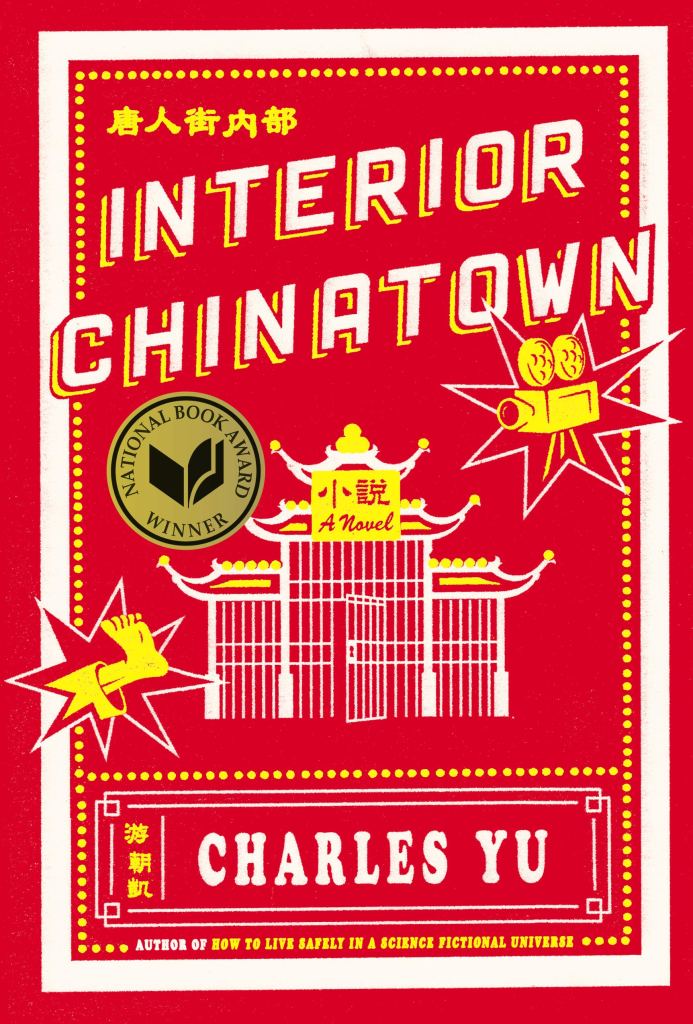
Willis Wu is a background actor on Black & White (a police procedural with a Black cop and a white cop) and strives to be more than just Generic Asian Man. Someday, maybe he’ll reach the top and become Kung Fu Guy, but first he must work his way up from Generic Asian Man #3, then #2, and finally #1. In between, he dies on screen, cannot act for six weeks, and provides the reader with some backstory about his parents and their struggles with fitting into their roles.
But this novel is more than that. It’s an unflinching gaze into what it must be like to be Asian in America; shoved to the sidelines and kept below a glass ceiling.
The story is told in screenplay format, which helps immerse the reader in the perpetual filming of the show while also demonstrating how the entire lives of the characters are defined by their roles on the show. This is both suffocating and illuminating.
This novel is clever, intriguing, and at its core, heartfelt.
There is a Netflix show of the same name based on the novel running at the time I’m writing this. While the show is entertaining on its own, the book has depth and a social message that I didn’t see in the show.
Did I get the image from Goodreads.com? Of course!
This is a story of living in boxes, or self-contained units. The story loops around and around between memory in the narrator’s head and memory he re-lives by visiting with his time machine.
Charles repairs time machines for a living. This doesn’t really satisfy him, but it’s work. He and his dad invented a time machine but that model failed. His dad has gone missing and Charles doesn’t quite know how to look for him, until he encounters himself and starts a time loop.
In this loop, Charles revisits memories of his dad and the building of the time machine. By watching these memories like an observer peeking through a window, Charles comes to understand his dad as a person, not just a parental figure. He watches his dad’s device fail when it’s demonstrated to a bigwig. What Charles knows, but his dad didn’t in that moment, was that another device was created and worked. Now people can travel back and forth in time as a form of recreation.
Charles’ dad spent all his free time in his garage building a machine that would allow him to spend more time doing what he wanted. His dad was insulted at the idea that each moment only comes once and can only be experienced once, so he designs a device that allows the person to revisit events, like how memory works. Ironically, his son spends a decade of his time in between times. He’s jammed the shifter in Present-Infinite where he just hovers and doesn’t move forward or backward.
This could be an allegory to how people hover in time by scrolling through websites, visiting social media, watching television or movies, or playing mindless games on their phones. When doing this, people aren’t engaging with their lives, they’re allowing their lives to slip past them, they’re hovering in between tasks, in between events, in between duties, just like Charles in his personal time travel box.
Charles’ mom is also stuck in a time loop, this one bought and paid for by Charles. In it, she makes dinner over and over and over again to feel helpful and useful, as her husband is missing. She designed the loop and visits the loop often, but also indicates that she’d like to be free of it.
Charles finds his dad in the past, which could be an example of dementia. He was unable to rescue himself and needed someone else to come get him.
Overall, the book was confusing, but good. At times it rambled on and felt repetitive, but that’s how memories are. I’d recommend this book to anyone who enjoys time loop stories, albeit this one is told in a more relaxed plot structure.


 Should Be Writing