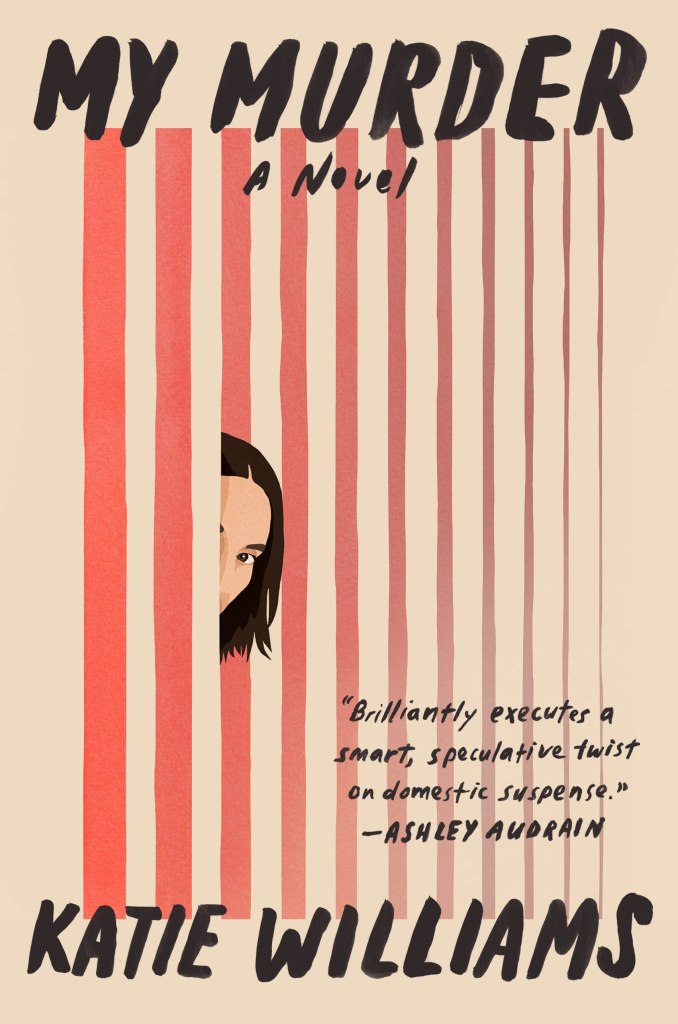
Lou is a clone, taking the place of her former, murdered, self. Brought back by a government program along with four other women murdered by the same man, she’s trying to adapt to life with no memory of her murder or the days preceding it. While she’s still herself, she’s also not; this body wasn’t the one who bore her baby or that sustained a scar from a childhood accident. A support group with the four other women helps, but also raises questions about her murder, questions that lead her to a shocking conclusion.
The concept of this novel is good; a woman is brought back and feels slightly out of step with the rest of the world. But the execution wasn’t great. I had no real image of the other women, or even Lou, as they weren’t described well. I also found the dialogue to be frustrating and empty, like the author was trying to bulk up the novel and missed the mark. The reveal at the end is interesting, but raises more questions than it answers.
I felt like I had to slog through parts of the novel because the pacing didn’t urge me to turn the page at all. I felt as though I could put the book down and forget to pick it up again.
I absolutely loved this book. I started reading it and had no desire to put it down until it was done. As usual, I didn’t read the inside flap of the book so I couldn’t remember what it was about. Because of this, every twist was a surprise for me, and delightful surprises at that.
The narrative style was fantastic. Rich descriptions without using a lot of words, punctuated by a main character who is an island of one, the book felt like Evelyn, the main character, was telling me how she arrived at a particular point in her life.
This reminded me of another book, one with an unreliable narrator, who was telling the story as if to make the reader/listener feel compassion for some truly horrendous acts. I genuinely thought this book would end differently, that I would find out Evelyn did something extreme and awful and the story was her justification of her actions. But it wasn’t, not really.
Evelyn is an award winning scientist. Her research is in cloning people. She can grow a complete replica of another person in about two months. Conditioning the clone is part of the deal, where she helps the clone to ‘remember’ events so the clone can behave as the person expects.
These clones are supposed to be used for organs or to take a bullet, definitely not for long term use. They aren’t considered people, so ethics are as firm as they can be.
Evelyn discovers her ex-husband, Nathan, has created a clone of her, named Martine. She had no idea Nathan had done this, had only thought he was interested in hearing about her research. The author skillfully created Evelyn to be a product of an abusive household, one where the mother tends to the father’s every whim and the father expects Evelyn to conform to what he wants in a child. Evelyn learned to be invisible, to not take up space, to not ask certain questions. This conditioning carries through in Evelyn’s life outside her mother and father, demonstrated by her blindness to Nathan’s cruelty and subterfuge. But also from her lab assistant, Seyed, someone she trusted and felt completely herself around. It’s eventually revealed that Seyed has been stealing supplies for another company and also assisted Nathan in creating Martine.
Some readers might be frustrated by Evelyn’s blindness to the people around her, but for me, this character felt wonderfully well written. Martine as well, she was Evelyn but also not Evelyn. Martine was a blank slate, trained to behave in a specific manner.
Martine breaks through her training to become her own person. She also gets pregnant, something clones shouldn’t be able to do. When Martine questions Nathan about this, about whether or not she was conditioned to want a child, Nathan reacts by trying to kill her. Martine kills him instead, then calls Evelyn in a panic.
They deal with Nathan’s body and soon need another Nathan because if his murder were to get out, Evelyn would lose everything she’s worked for, so they clone him. This is where I thought the book was going to go down a dark, dark path, but it didn’t. The ending, while satisfactory, also could have been written to demonstrate much more disastrous consequences to Evelyn’s actions.
Still, I loved this book. Normally I dislike any title with wife, mother, or daughter in it as it usually indicates that the main female character is only a person in relation to the husband, child, or parent, but in this case, the title was remarkably spot on. I’d recommend this book to anyone who likes navel gazing and a deep view into what it’s like to be the product of long term abuse.

 Should Be Writing