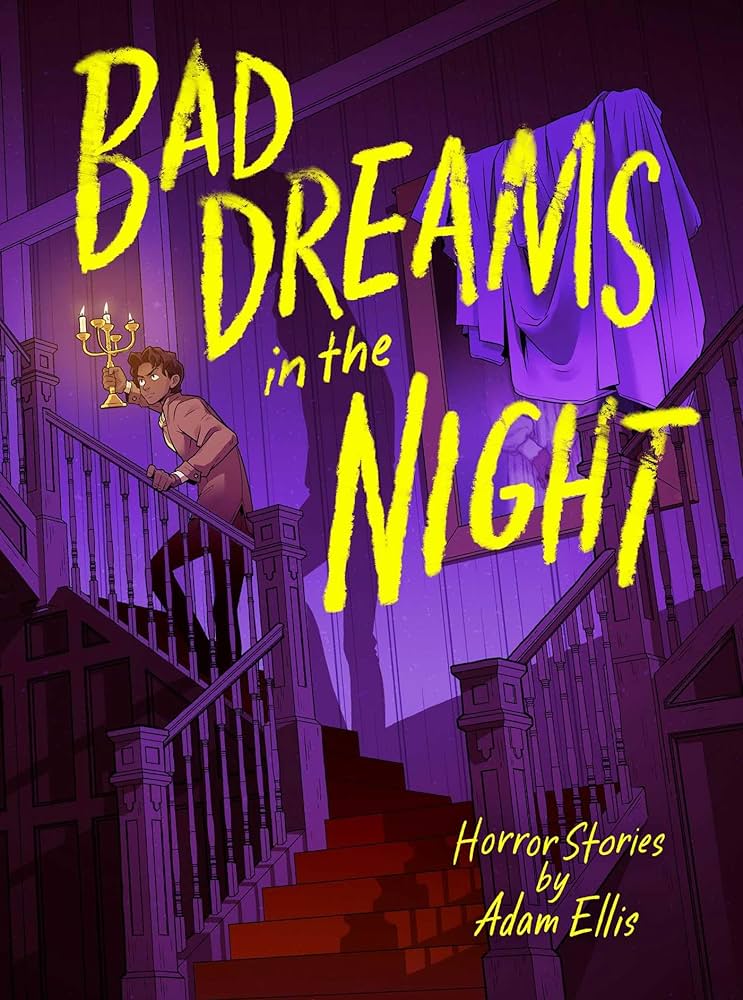
Eleven horror stories exploring the supernatural lurking in everyday life.
I love the author’s art style and have been following them for a few years. I’d read some of these comics online, but only one to completion. The author is careful not to spoil all the endings.
Each story is creepy in the best possible way. I love a good horror and these are delightfully disturbing and twisted.
Once upon a time, curling up with a book by this author was like spending an evening with an old, twisted friend. I’ve loved many books by King and was looking forward to this collection of short stories.
I was disappointed.
The stories weren’t dark, twisted, or weird. They had elements of weirdness to them, hints of supernatural elements in some, but none of the stories were particularly creepy or strange. It’s like the author wrote a bunch of drafts for stories but didn’t bother to round them out.
The endings felt rushed, too. One story in particular, Danny Coughlin’s Bad Dream, had an ending that felt cobbled together, like the author didn’t know how to wrap it up so he just threw together some stuff and called it done. I honestly think I could have come up with a creepier ending.
I’m accustomed to his characters being faceted and interesting to read, but these characters were forgettable. King used to put the reader right into the mind of the characters, right from the get-go. But here, he told the reader most of the information as if to just hurry up and get the story written. I admit, it’s been a long time since I’ve read Christine, Cujo, or The Shining, so maybe my memory has inflated his work. Or, maybe, he’s just not as good at telling stories as he used to be.
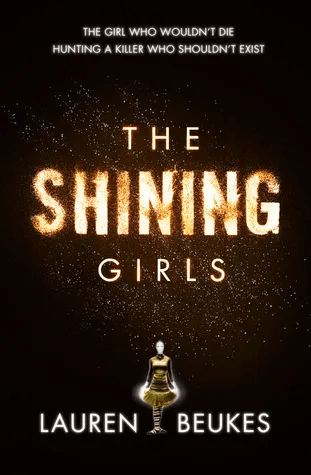
Mack is one of fourteen people chosen to participate in a game of hide and seek where the winner gets $50,000. Homeless and with nothing to lose, Mack agrees. What she doesn’t know is that to be found is to die.
The novel was engaging and kept my attention throughout. While the cast of characters is long, it was fairly easy to tell them apart and keep track of them all. The reason why these fourteen people were selected is revealed at a pace that was satisfactory. Overall, the book was okay. It was easy enough to follow and the story kept me entertained.
I did have two problems with the novel (and here we have some spoilers).
The amusement park has a monster inside and that monster is eating two people a day. Okay, I can get behind that. But the monster has to eat people who share a bloodline with the original fourteen people sacrificed. No problem, I can get behind that too. But the reward for sacrifice is prosperity. So the fourteen that sacrificed themselves ensured prosperity for their families for seven years. But Mack didn’t have prosperity, neither did any of the other participants in the hide and seek game. So, I guess I could assume that the more watered down the bloodline the less prosperity will be given, but then, after something like a hundred years, the bloodline would be pretty watered down naturally. Yeah, this is a nitpicky point, but it pulled me out of the story.
The second problem was the monster itself. It’s said late in the book that the monster isn’t something you can kill, it’s a covenant or an agreement made for prosperity. But, a bit earlier, one character said she and others sneaked into the monster’s lair while it was sleeping and cut out its eyes. But if it’s just a covenant, arguably one that kills people, the eyes shouldn’t be able to be removed.
Anyway, the novel was good, better than the first book I read by the same author.
I kept stumbling across rave reviews of this novel so I thought I’d give it a read. I haven’t read anything else by the author but am familiar with titles that include the phrase, “Got Pounded in the Butt” or somesuch thing. Based on the reviews, I figured this book would be a serious horror.
It was not.
I’ve read a lot of horror in my day. Many dark evenings were spent deep in the trenches of gore, psychological horror, thriller, and graphic murder mysteries. While it’s not my thing right now, I’m familiar with spine-tingling creepiness nestled between the words of horror novels.
This novel made me tip my head in amusement, not horror. I mean, a girl coughing up a bunch of bugs? Sorta gross, sure, but more amusing than anything else. Before I get too much farther, here’s the basic plot:
Rose is twenty and on the cusp of graduating high school. Her uber-religious upbringing entailed taking two years off school to study the tenets of the Kingdom of the Pine, so she’s a bit behind her peers. KotP also runs the most effective gay conversion camp, Camp Damascus. Rose, while enjoying a late summer day with friends, notices how she really wants to impress another girl, not the boy she arrived with.
But her thoughts of this girl are interrupted by the visage of a strange looking woman with stringy hair, long fingers, and white eyes hiding in the trees nearby. Whenever Rose thinks of her attraction to other girls, this creepy woman shows up. At one point, the creepy woman actually breaks one of Rose’s fingers, so she’s not a mirage.
Now, I can get behind this plot. LGBTQ+ people are tormented by their demons. Okay. Those demons are tethered to the person at the gay conversion camp. Sure. Rose doesn’t remember attending the camp and is shocked that her parents don’t seem fazed by her coughing up a billowing cloud of bugs or when she tries to tell them about the creepy woman. Great.
These elements could contribute to a gut-wrenching creepfest but instead I felt little more than amusement. I finished the book only to see how things would be resolved; would Rose vanquish her demon? What of the demons of the others affected?
After finishing the novel I sat and thought about why this didn’t tug at my heartstrings or ice my belly. I suspect it’s because the author keeps the reader at a distance. Variations of the phrase, “I found myself…” in the narrative put a wall between the reader and the character’s experiences, as did the use of “suddenly” and “seemed to”. Bottom line: it was all telly and not showy.
Not every scene needs to be shown. Many scenes can be (and should be) told to keep the narrative flow running. But a novel that’s all telling makes for an emotionless read.
Along the same lines, I believe an editor should have caught the overuse of “I blurt” and “…is all I can think to say”. Those phrases appeared so often that I wanted to highlight them and send the manuscript back to an editor.
The overall message, however, is good. Vanquish your demons and find comfort and support in your found family instead of your blood relations, especially if the person you are goes against the person your relatives expect you to be. People deserve to have the room to learn who they are without punishment or shame. If that means someone has to leave a room and find a new one with more supportive people, so be it.
From what I know, this author is popular online and writes inclusive stories featuring LGBTQ+ characters. This novel had the potential to be great, but turned out feeling rushed and emotionless.
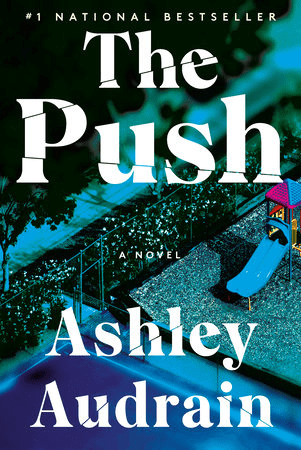
This novel is about motherhood, nature vs nurture, and generational trauma.
Told mostly from Blythe’s perspective – in second person no less! – we learn about how she never really wanted to be a mother, but chose to anyway. Her husband, Fox, put pressure on her to expand their family and since the marriage was going so well, she thought parenting would be fine.
Except that her mother left her when she was thirteen, and her grandmother took her own life when her mother was young. Neither woman wanted to be a mother, yet became pregnant anyway. They both tried to parent, to the best of their ability, but failed in the role.
Now Blythe has a daughter, a daughter that wants nothing to do with her pretty much since birth. When this girl, Violet, orchestrates the death of a toddler at a park, everyone thinks it was an accident. I mean, who would think a little girl could trip a toddler, coldly and deliberately, and cause his death? The relationship between Blythe and Violet remains strained and Fox brushes away all Blythe’s concerns, saying that Blythe simply needs to do better.
When Blythe becomes pregnant again, she has a son, Sam, that she loves dearly. All the love she should have felt for Violet is found in her relationship with Sam.
Until Violet pushes Sam’s stroller into traffic.
Again, nobody believes a little girl could do this. It was an accident, nothing more.
The marriage breaks up and Blythe tries to be a good mother to Violet, but the rift is too big to repair. Fox has moved on and has had another child with a new woman. Blythe worries that Violet will hurt this new child, but the mother brushes off concern, just like Fox did.
The novel is well written. Second person is remarkably hard but the author pulls it off beautifully. The strained parenting relationships are contrasted by a kind mother down the block, Mrs. Ellignton, taking Blythe under her wing when her mother leaves. While reading, the question of an unreliable narrator remained. Was Blythe really seeing Violet as a coldhearted person capable of murder? Or was Blythe seeing things that weren’t there? The final line of the novel answers those questions well enough.
It’s a good read, riveting in its horror, but definitely not for everyone.
Stephen King was the first author to show me what I call a ‘conversation style’ narrative drive. When reading his works I always felt like I was firmly inside the mind of the POV character, and that mind wasn’t a highbrow, highfalutin’ kind of person. Instead the perspective was more Regular Joe, albeit an oddball Regular Joe.
This radically different narrative drive was a refreshing change from what I was reading at the time. I felt like King had opened a door into a different kind of book, a more engaging and richer book, with strange goings-on to boot.
I cut my teeth on Christine, Pet Sematary, Cujo, and Carrie. This length of novels allowed me to really dig in to his characters and feel like I was given a secret door access into their minds. His longer works, like The Stand, drag a bit for me and his shorter works, his novellas, tend to shine in their brevity.
All that said, I purchased If It Bleeds at an airport so I’d have something to do if all my electronic devices failed me on a flight. It turned out none did, so I only got around to reading this book now.
I kept having to re-route my eyes, as they skipped over words and skimmed sentences. This isn’t normal for when I’m reading King. It’s almost like someone else wrote these stories. With that, here’s my impression of the four stories.
Mr. Harrigan’s Phone Craig lives in a small town with his dad. An extraordinarily wealthy man, Mr. Harrigan, moves into a big house on the hill. After hearing Craig recite some Bible passages in church, he hires him to read to him and water his plants.
They develop a kind of friendship. Mr. Harrigan gives Craig scratch-off tickets along with a card a few times a year. When one ticket pays a fair sum of money, Craig buys Mr. Harrigan an iPhone, one of the first iterations of it.
Mr. Harrigan dies and Craig slips the iPhone into his pocket. From there, the story has a King-ish twist, where Craig receives texts from that phone, but only after he calls it to hear his friend’s voice.
This is a story mostly about consequences and settling debts, but it was lacking a bit. The story was fine, the pacing fine, the characters fine, but I thought it was going to go somewhere else. Mr. Harrigan sees the wealth of information and asks the question of when, or who, will stem the flow. I thought the story would go there, but it didn’t, leaving that thread loose.
The story was okay. Not King’s best work, but okay.
The Life of Chuck Don’t we all think we’re the protagonist of our own stories? Or that we contain multitudes? Chuck wasn’t aware of it, but he was what kept the world alive.
This story is told backwards: act three, then act two, then act one. It was an interesting way to see Chuck’s life, what was important to him, and how he learned to let go and dance. Also, a haunted attic.
The story felt a bit forced though. Too many mentions of the scar on Chuck’s hand, maybe. Just trust the reader to be able to figure it out, no need to put so much focus on it. Overall it felt clumsier than I’d associate with King.
If It Bleeds This was the longest story in the collection, one that might push the boundary of novella length, and rather weak.
The story itself is fine. A private eye, Holly, realizes a news anchor could be a creature from her past. The same kind of creature that killed her colleague some years before. She investigates and discovers that she’s indeed correct.
I had three main problems with this story.
The first is that it was a semi-sequel to a novel, The Outsider. I hadn’t read the novel and wasn’t really familiar with the story, but I could pick up the clues: there was a shapeshifting monster that fed on fear and grief. The issue I had was with the overuse of references back to the novel. One or two, sure, I can get behind that. But it felt constant and after a while I wondered if an editor had read this work. I felt like if one had, about a quarter of the story would have been cut for repetition.
The second problem I had was with how the monster is defeated. This quote bothered me quite a lot:
“‘..how can you ever explain a dead guy at the bottom of the elevator shaft?’ Holly is remembering what happened to the other outsider. ‘I don’t think it will be an issue.‘”
Unless the reader has read The Outsider, how are they to know what happened to this outsider? I haven’t read it and so I was mystified. Bugs are mentioned a tiny bit later. Am I to assume the outsider turned into bugs? If so, will the bugs die? Live?
This was extremely frustrating.
The third problem was the mention, twice, of how one character had a defining trait of the outsider. Holly’s Uncle Henry could move fast, faster than he should have been able. Was he somehow infected by the outsider? If so, when and how?
Other than that, I felt the story took too long to get where it was going. I kept finding reasons to put the book down and ended up slogging through just to finish.
Rat This one was the best of the bunch and felt more like King’s writing than any other. I’d say he inserted himself in there – the main character is trying to write a novel and has writer’s block – but I’d also say that most of his writing has a slice of him somewhere.
In this story, Drew goes up to a family cabin to write a novel. Things go well, until they don’t, and he makes a deal with a rat. The pacing felt like King, the odd rat felt like King, and the resolution even felt like King.
Conclusion: overall, this collection felt limp. The horror and weirdness I associate with King simply wasn’t there. Or, perhaps, I’m a seasoned reader of his work and can no longer get the willies from reading it.
I’d seen the miniseries before I read the book so I had some idea of what to expect. Still, I was pleasantly surprised.
The primary character is Harper, a man who’s down on his luck in the early 1930s. He steals a coat with a key in the pocket and is inexplicably drawn to a shuttered, ramshackle house in Chicago. Inside, the house is luxurious, except for the body on the staircase. He can see the beauty because he has the key.
The secondary character is Kirby, a woman who is brutally attacked while walking her dog. Her attacker is Harper, who met her when she was a little girl, then again about two decades later.
An unexpected character is the House. It has a kind of interdimensional travel ability for the person with the key. Harper can think up a time, open the front door, and walk out into that time period. The House also calls to Harper to complete a circle of killings and leave a memento from a different time, and different murder, on the fresh body.
But what happens when the circle is complete? Harper desperately wants to know, he’s driven to completing the killings to ease the House’s invasion of his mind. But Kirby lives through her attempted murder, thus leaving the circle incomplete.
The author did a fabulous job in worldbuilding. Each time period felt wonderfully authentic. Even Harper’s reaction to the future was believable. Also, the author did a great job in completing the narrative circle and tying up loose ends. The body on the staircase is explained, eventually, and the ending brings the reader back to the beginning.
Where the author failed, though, is in solving the murders. The reader knows Harper committed the crimes but Kirby and a detective don’t ever find out what’s going on. Kirby almost does. She has an inkling that seems too farfetched to be real and is almost given the payoff of understanding and knowing how it all ties together, but not quite. So while the main story is tied up, the character’s searching is left open, which was frustrating.
Overall, the book is worth reading even after watching the series.



 Should Be Writing