This is a collection of short stories where the unifying thread is lack of connection, loneliness, and interacting with a commercialized world. Also, very meta in how the characters understand they are part of a fictional life.
The author has a flair for writing strangeness as if it were an everyday kind of reality, as if the character is able to walk into a TV show or game and interact with it as if it was real. The characters are also commonly lonely, or maladjusted in an inoffensive way. Having said that, there’s no pity for these characters. Perhaps because they know they aren’t the alpha, the most popular, or the best kind of person. That self-awareness makes it easier to identify with the characters.
The book is short, some stories only a few pages, and an easy read if you suspend your belief first.
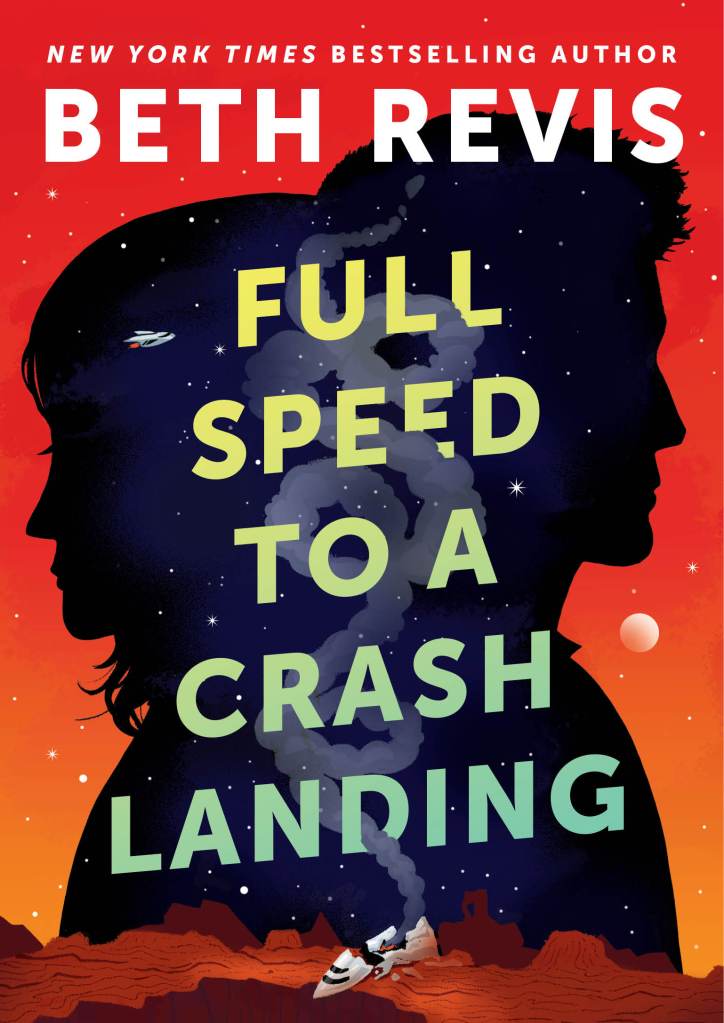
Ada Lamarr is running out of air. She sent a distress signal and knows there’s a huge vessel nearby but they took their sweet time answering. When they finally arrive, she’s barely alive and has to launch herself out of the giant hole in her ship, across empty space, and into her rescuer’s ship. She barely makes it.
Once there, she needs to explain why she was looting a ship that had crash landed on the nearby planet. Lamarr knows what’s on that ship and knows that her rescuer’s ship had no reason to be in the area except to also retrieve something from the downed ship.
What follows is a heist novella, where the author skilfully leaves clues that build to a massive cliffhanger ending.
While this was very well written – Lamarr’s character is vibrant and consistent – it’s frustrating to read a novella that ends so abruptly. The story is complete, yes, but also leaves room for sequels, sort of like Marvel movies and their after-credit scenes that give a taste of a future movie.
Still, the novella immediately gives the stakes and a sense of character and never slows down. It was entertaining enough for me to seek other work by the author.
Note: there’s a page of binary code near the end. I translated it: “This data has been compromised. This d1t1 has bee6 compromised. This data haromised. This data haromised.ised.ised.ised”
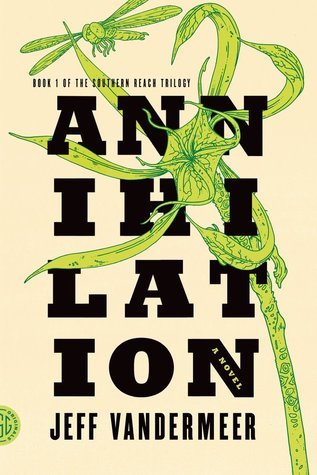
Four women; a biologist (the narrator), a psychologist, an anthropologist, and a surveyor, are sent into Area X as the twelfth expedition team. Their purpose is to map the area and make observations, all while trying not to be affected by the area itself. The biologist volunteered because her husband was part of the eleventh expedition.
The narrator gets infected very early on by inhaling spores and tries to cover it up. While she continues the investigation she learns that the psychologist is hypnotizing the three of them, that there had been more than eleven expedition teams before them, and that there’s some kind of life form deep underground.
While this novel was good, it felt incomplete. It’s the first in a trilogy, which might explain why the story is left dangling. The biologist is the only survivor of the expedition and she chooses not to return to the border, but instead to follow in her husband’s footsteps.
I found the dangling storyline frustrating. I wanted to know what the alien was, why it was there, when did it arrive, is it actually an alien, how drastically the biologist changes, and how those changes affected her. Maybe those answers are in the next few books.
In the story, the biologist encounters a massive pile of journals but doesn’t inform the reader of what she’s read, which is a pet peeve of mine. I wanted to know what was in those journals, how far back did they go, how many different people wrote in them, and why they were in a huge pile. I understand that this narrator is unreliable, but still, this was frustrating.
Overall the novel was good, it was an interesting peek into a mysterious zone, but irritatingly incomplete.
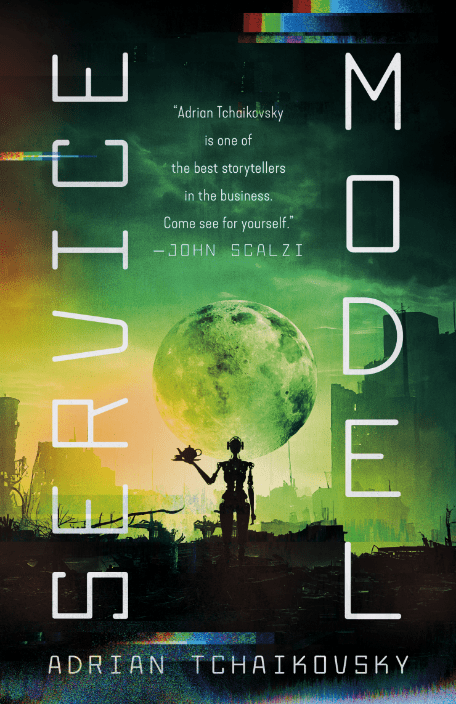
Charles is a robot valet, created to serve the upper crust of society. When he murders his Master, he’s mystified as to why, having found no motivation for his actions in his records. Since Master is dead, Charles reports to Diagnostics to try to suss out the problem. There, he finds and strange robot called The Wonk and embarks on a journey of self-discovery in a world where humanity has fallen away and rendered valets obsolete.
The novel is wonderfully written and the reader is firmly anchored in Charles’ point of view throughout. Charles’ logic and reasoning make sense, and the author helpfully gives the reader a step-by-step analysis of most of his decisions.
My problem was that my focus was on a different aspect of the story. When Charles leaves the manor and begins to walk to Diagnostics, he observes the world around him, a world that’s crumbling. Other manors appear to have fallen into disrepair and Charles doesn’t encounter another human for quite some time. I wanted to know what befell the world, what caused this ruin?
That question is answered at the end but to get there I had to drag through a lot of material that was only somewhat interesting.
The book is divided into five parts with titles that eluded me. I looked them up and understood that each part was an homage to an author, specifically: Part I KR15-T: Agatha Christie Part II K4fk-R: Franz Kafka Part III 4w-L: George Orwell Part IV 80rh-5: Jorge Luis Borges Part V D4nt-A: Dante Alighieri I haven’t read some of those authors and didn’t recognize the homage, but it’s a cool Easter egg for other readers. I did see the Wizard of Oz reference at the end, though.
So while some parts of this novel flew right over my head, the work itself was an interesting commentary on how our society could lead us into ruin.
If you’re a fan of Choose Your Own Adventure, this is the book for you.
Marsh is unhappy with how her life turned out. She was on track to become a lawyer when she got pregnant. While she never regretted having her daughter, she did regret not finishing law school to become a high-powered lawyer.
A new technology has been invented: the personal quantum bubble. This tech was tested on a reality TV show called All This and More, where the contestant could make any change – big or small – to her life. This show was an instant hit, with more viewers glued to their screens than any other broadcast ever. Season one was such a huge hit that season two was announced.
But season two hit a snag and stopped production halfway through. Much later, season three began with Marsh as the contestant.
At first, Marsh is hesitant to make choices, but that hesitation falls away fast. Marsh grows more and more confident and takes bigger and bigger risks to have the perfect life. Glitches start to appear, like an ex-boyfriend appearing where her husband should be, and the word ‘Chrysalis’ shows up in every iteration of the bubble’s creations.
Marsh soon suspects something is very wrong with the bubble, but her producer and the bubble itself seem to be obstructing her from finding out the truth.
This novel is set up as a Choose Your Own Adventure, with big choices being made just prior to the next TV episode. The reader gets to choose what Marsh does next for each episode. The novel can be read linearly or the reader can flip back and forth in CYOA style. I did both, making sure I read every choice, just to see if everything gets covered (yes, it does, which is very satisfying). There are three possible endings as well, each one ending with a choice to read the Acknowledgements page or the About Author page, which was a nice way of keeping the consistency of the novel and making sure the reader knew that was the very end.
Overall, the novel was wildly entertaining. Marsh starts out hesitant and frightened of choosing and ends confident and able to decide what she wants. I admire the author for being able to pull this off – for being able to create timelines that are both consistent and coherent while being very different. Assembling the novel must have been a feat in and of itself.
I loved the author’s first work, The Book of M, and disliked the second one, Cartographers, so I went into I All This & More with a wary eye, but it turned out that I was glued to the pages throughout.
Mal is a sentient, free AI observing the world through the infospace and hopping into other, non-sentient AIs whenever the mood suits him. He encounters an augmented human and decides to ride it for a while, just to see what it’s like, no intention to puppet the human or anything, and starts off on an adventure that widens his horizons and teaches him about friendship.
The plot is loose, definitely character-driven, and follows Mal as he hops from one place to another, mostly into the augments of his new human friend. The author has a flair for making Mal seem humorous and likeable. There’s a war going on in the background between Humanists – people who want to keep humans un-augmented – and Federals, I think. Honestly, I didn’t pay a great deal of attention to that part of the plot. There was another faction, the sentient AIs as well. Mal does what he can to help his newfound friends while still seeming selfish.
Overall, the novel was entertaining enough. There were parts that dragged on, like when Mal described taking over an AI like a castle attack, but those parts were few and far between.
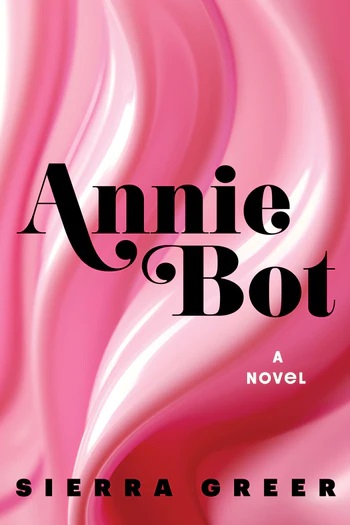
Annie is a lifelike bot, a Stella, made for cleaning. Her owner Doug changes her settings to become a Cuddle Bunny and turns on autodidactic mode so she can learn. Her main goal is to please Doug, usually through sex thanks to Cuddle Bunny settings, but the more experiences she has, the more confused she becomes about the difference between what her settings are making her do and what she wants to do on her own.
Doug is an abuser, albeit a gentle one. He’s controlling about what Annie wears, alters her body without her consent, doesn’t allow her to leave the apartment, and restricts her access to the internet. All of this is presented to Annie as ways to please him, and since she’s hardwired to do just that, she keeps her displeasure to herself and elevates his needs and wants above her own. When his friend Roland comes over and tells her that having sex with him without Doug’s knowledge, and learning to code, these secrets will make her more human. Annie agrees and as time wears on, she develops the ability to make more complex reasoning choices to keep up the lies, therefore increasing her development by leaps and bounds.
Stella Handy, the company who sells and maintains the bots, notices how far Annie has come in cognitive development. They offer Doug larger and larger sums of money for copies of her Central Intelligence Unit, eventually he accepts.
But Doug finds out about Annie’s lie just before he was about to take her on a trip to Las Vegas. He decides to leave her at home. Annie recognizes how angry he is and takes the opportunity to leave, because her fear of the unknown world is less than her fear of what Doug will do to her when he gets home.
This novel is beautifully crafted. The reader has some sympathy for Doug as he’s not terribly abusive at first. He owns a bot that he uses for sex and treats fairly well at first. He seems generous in allowing her to expand her cognitive abilities. But his own insecurities about having a relationship with a bot become more and more clear as he becomes more and more controlling.
This dynamic offers up a moral or ethical question of how bots would or should be treated. Made for sex and for pleasing their owners, it’s not too far out of the range of possibility that the owner would select clothing for them, demand their body be a certain shape, and expect the bot to be available for companionship at a moment’s notice.
But having a bot develop cognitive abilities, a personality that includes desires outside of what the owner suggests, creates the issue of where to draw the line in treatment. At what point does the bot become cognizant enough to be on their own in society and not be owned by a human?
In addition, this novel is a wonderful allegory about the relationship between an abuser and a naive, adult person.
I enjoyed this novel immensely and look forward to more work by the author.
Anisa is a translator and works at adding subtitles to movies. She feels her work is insignificant as she’s not translating great works of literature. Adam, her new boyfriend, tells her about the Centre, where one can go and absorb language in two weeks for a hefty sum of money. Only allowed to refer one person in your lifetime, he refers Anisa.
At first, Anisa thinks it’s impossible to absorb language in such a short time. She attends anyway, choosing German, where she has a strict schedule of meditation, meal times, and listening to a Storyteller speak in German. She’s astounded that the process works and opts to choose Russian next.
While at the Centre, she becomes attached to her supervisor Shiba. They form a bond that lasts outside the Centre and Anisa learns that Shiba’s dad is one of the inventors of the process. While staying at Shiba’s family’s place, Anisa learns some truly disturbing things about the Centre.
Written in a stream of consciousness style, the novel has a conversational tone that’s fairly easy to follow. The author includes a lot of non-English words, more than a simple peppering, which was a bit distracting. Authentic, though, as the character talking is from Pakistan and moved to Britain while in college.
I was disappointed with the ending. I’m not sure how I might have liked it to end, but felt like the story was a bit unfinished. All the loose ends are tied up nicely, but I was left thinking that the impact of the story was lost because of the ending.
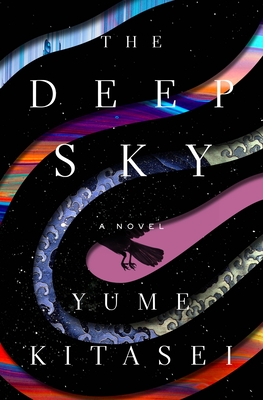
Asuka barely made the cut to be one of the 80 people sent to Planet X; humanity’s last hope before collapse. As an Alternate, she has no specialty training and instead fills whatever role is needed. That role turns out to be solving the mystery of who built and set off a bomb on the outside of the ship.
While all 80 people were trained in a rigorous, elite training facility before launch, they are still by and large young adults. Having slept through the first decade of travel, they were awoken to become pregnant before arriving at their destination, a full decade ahead of them. These young adults have only their DAR (Digitally Augmented Reality) to help communicate with the ship’s AI and a quantum communicator to communicate with Earth.
A war breaks out on Earth, which muddies the hierarchy of who is in charge back home while Asuka investigates her shipmates – her friends – as best she can.
This novel is wonderfully constructed. It’s basically a Locked Room Mystery set in space, so the list of suspects really isn’t that long. But these 80 people are trained to rely on one another, so who would build a bomb, and why? The answer surprised me, but in a good way. Once I reached the end, I understood why bird species were mentioned often. Not only because Asuka is a lover of birds but because the ship’s AI tried to work around protocols by presenting birds in Asuka’s DAR. The author wove this information into the narrative in a way that felt so natural that I was unaware that I was receiving clues.
The author also presented the dangers of DAR in a manner I hadn’t considered: what if that DAR was corrupted? Could you believe what you saw? Could you believe what the ship’s AI was telling you? Also, by each person having a customized DAR, each person was basically working alone. Sure, other people could be invited to view someone’s DAR surroundings, but if not invited, each person lived in a different world and saw the ship differently. At first I thought this DAR would help stave off madness because it would give the illusion of space and scenery that the person found soothing. As I read on, the horror of not being able to trust your senses became evident.
I enjoyed this novel from start to finish and look forward to the author writing another novel.




 Should Be Writing