This is a little book, no more than 177 pages and formatted to almost postcard size. Like a bite-sized novel.
The story is told in the point of view of the wife, referred to as “the wife”, and snippets, like tiny journal entries. It chronicles the woman’s life from shortly before meeting her husband to the dissolution of their marriage. They endure several trials of life, like a colicky baby, bedbugs, and career shifts, which help define their relationship.
This novel reads as musings on life, art, and love, with tenderness, rage, and wit.
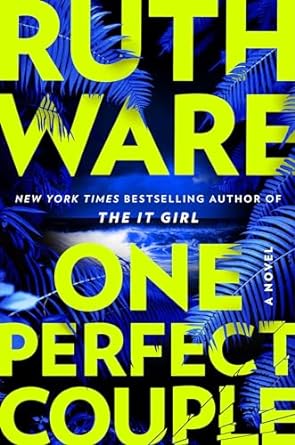
Lyla is at a crossroads in her career as a virologist. Her post-doctorate research has ended and she might not have another contract right away. Plus, things are rocky with her boyfriend Nico, who is aging out of being a young actor.
Nico gets the chance to be on a reality TV show, One Perfect Couple, filmed on a beautiful desert island and wants Lyla to join him. Without her, he can’t go. She sees that this might be his last big chance at getting noticed for his acting, plus her work has dried up, so she reluctantly agrees.
They agree that she’ll sabotage one of the challenges early on so she can go home inside of two weeks, but the reverse happens. Nico is the first one sent home.
That night, a storm rolls over the island. The boat carrying Nico and the production crew doesn’t come back. In the morning, two people are found dead. Now, there’s only eight of them left, the radio is slowly dying, and they have limited food and water. Plus, there seems to be a killer among them.
The author does an excellent job at writing tired, hungry, stressed, and injured characters. This discombobulated state of mind is believable so when Lyla doesn’t draw connections to things right away, it’s easy to hand-wave it away as a reader.
However, there’s a teensy twist at the end, a page or two explaining why these couples were hand-picked for this reality show but I don’t think those breadcrumbs were given to the reader, making it very difficult to guess.
Having said that, the author holds the tension well throughout the novel. I was glued to it and found excuses to keep on reading. I’ve read a few other novels by this author and will likely keep looking for new releases.
Where did I get this cover image? Yeah, from Goodreads.com
As acting Sheriff and on call, Ben Packard is called to a crime scene where he finds a man has been shot to death in his bed while his wife slept upstairs. Packard investigates the murder, digging into the Gherlick family secrets, including their narcissism, and deals with the inevitable death of the town’s Sheriff, Stan. The town council calls for the formal election of a Sheriff, so now Packard needs to decide if he’ll run. It’s not a job he wants, but his running mates are less than qualified.
I enjoyed the author’s previous novel,And There He Kept Her, where Ben Packard was introduced. The author put a few tiny breadcrumbs in the first novel about the reasons why Packard moved to Sandy Lake and picked them up right at the end of this novel, but left the reader without any answers. Instead, this novel ends on a cliffhanger.
The novel does solve the crime of the man shot in his bed, though. No loose ends there. The author has a flair for describing characters to make them each feel well rounded, even if they have very little page time.
I enjoyed the narrative style and kept finding excuses to keep reading, which is good. I’m looking forward to the third novel in the series as well.
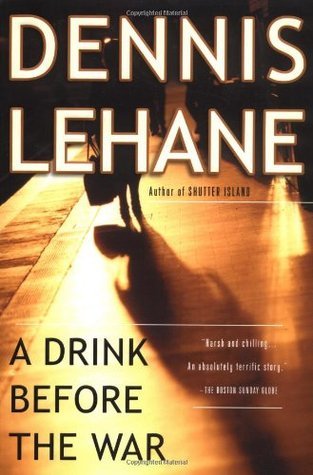
I have never seen the n-word so much in my entire life.
This novel was written in 1994 and I tried to keep that in mind while reading. I’d chosen this book because it’s the first in the Kenzie & Gennaro series by the author. I’d read a few in the series and figured it might be good to start from the beginning so I can get a full view of the timeline, character development, and callbacks.
I do enjoy this author. I loved Mystic River, Gone, Baby, Gone, and Small Mercies. These are all later works though. This earlier novel showed the author’s roughness in writing.
Firstly, the female lead, Gennaro, has only two main characteristics: she’s beautiful and in an abusive relationship. The male lead, Kenzie, often comments on her looks which got old really fast. There’s not a lot of character development there, except that she beats the crap out of her husband at the end.
Secondly, the novel felt like the author’s commentary on gang war in south Boston and came across as heavy-handed. Sure, it’s part of the plot that one gang leader is featured in photographs in an indelicate state along with a senator, but after a while I wanted to skim through the political commentary and get back to the detective work.
Thirdly, race was featured as ‘some Black people are good and some white people are bad’, which, reading through today’s eyes, felt very stereotypical. The gangs involved were all Black, which didn’t help matters. But again, this was written in 1994 so the nuance I’d expect today was nonexistent back then.
Overall, the story moved slowly, there was little character development, and I was tired of the n-word after the first instance of it. I’d recommend sticking to the author’s more recent work.
Annie receives a letter saying she’s an heir in her Great Aunt Francis’ estate and to be at the lawyer’s office so it can be discussed further. When she arrives, she finds her aunt dead. The condition of the Will is that she has one week to find the killer or her entire – and very large – estate will go to a developer.
Annie’s mother is supposed to be the one to inherit everything and this last-minute change stymies Annie, but she shows up at the lawyer’s anyway. Great Aunt Francis was known to be paranoid and deeply believed in a fortune told to her at a fair in 1965 when she was a teen, so while a change in her Will is a surprise, it’s not unheard of.
Finding her aunt dead before the Will can be discussed is a shock. According to the lawyer, the race is on between Annie and another potential heir to find her killer before the deadline. The reader follows Annie as she reads entries from Francis’ diary and tries to follow the clues that led to her murder.
This back-and-forth storytelling is engaging, although some hand waving is needed because the diary entries read like mini stories, not actual diary entries. This detail took me out of the story, but I see why it was needed. The narrative style is easy to read and the clues are laid out well. I didn’t guess the killer, but when the killer was revealed it made sense.
The story is book one in a series and the ending sets up a few details of the series without making the novel feel unfinished, which was good. I’ll likely seek out the next one and read it too.
Mal is a sentient, free AI observing the world through the infospace and hopping into other, non-sentient AIs whenever the mood suits him. He encounters an augmented human and decides to ride it for a while, just to see what it’s like, no intention to puppet the human or anything, and starts off on an adventure that widens his horizons and teaches him about friendship.
The plot is loose, definitely character-driven, and follows Mal as he hops from one place to another, mostly into the augments of his new human friend. The author has a flair for making Mal seem humorous and likeable. There’s a war going on in the background between Humanists – people who want to keep humans un-augmented – and Federals, I think. Honestly, I didn’t pay a great deal of attention to that part of the plot. There was another faction, the sentient AIs as well. Mal does what he can to help his newfound friends while still seeming selfish.
Overall, the novel was entertaining enough. There were parts that dragged on, like when Mal described taking over an AI like a castle attack, but those parts were few and far between.
Annie is a lifelike bot, a Stella, made for cleaning. Her owner Doug changes her settings to become a Cuddle Bunny and turns on autodidactic mode so she can learn. Her main goal is to please Doug, usually through sex thanks to Cuddle Bunny settings, but the more experiences she has, the more confused she becomes about the difference between what her settings are making her do and what she wants to do on her own.
Doug is an abuser, albeit a gentle one. He’s controlling about what Annie wears, alters her body without her consent, doesn’t allow her to leave the apartment, and restricts her access to the internet. All of this is presented to Annie as ways to please him, and since she’s hardwired to do just that, she keeps her displeasure to herself and elevates his needs and wants above her own. When his friend Roland comes over and tells her that having sex with him without Doug’s knowledge, and learning to code, these secrets will make her more human. Annie agrees and as time wears on, she develops the ability to make more complex reasoning choices to keep up the lies, therefore increasing her development by leaps and bounds.
Stella Handy, the company who sells and maintains the bots, notices how far Annie has come in cognitive development. They offer Doug larger and larger sums of money for copies of her Central Intelligence Unit, eventually he accepts.
But Doug finds out about Annie’s lie just before he was about to take her on a trip to Las Vegas. He decides to leave her at home. Annie recognizes how angry he is and takes the opportunity to leave, because her fear of the unknown world is less than her fear of what Doug will do to her when he gets home.
This novel is beautifully crafted. The reader has some sympathy for Doug as he’s not terribly abusive at first. He owns a bot that he uses for sex and treats fairly well at first. He seems generous in allowing her to expand her cognitive abilities. But his own insecurities about having a relationship with a bot become more and more clear as he becomes more and more controlling.
This dynamic offers up a moral or ethical question of how bots would or should be treated. Made for sex and for pleasing their owners, it’s not too far out of the range of possibility that the owner would select clothing for them, demand their body be a certain shape, and expect the bot to be available for companionship at a moment’s notice.
But having a bot develop cognitive abilities, a personality that includes desires outside of what the owner suggests, creates the issue of where to draw the line in treatment. At what point does the bot become cognizant enough to be on their own in society and not be owned by a human?
In addition, this novel is a wonderful allegory about the relationship between an abuser and a naive, adult person.
I enjoyed this novel immensely and look forward to more work by the author.
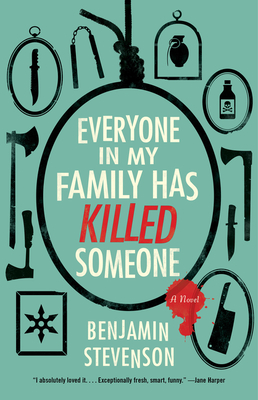
A snowed-in ski resort, a body, and a tense family reunion; all the elements for a locked room mystery.
Ernest is the narrator who promises to play fair and assures the reader that he’s quite reliable. Everyone in his family has killed someone and the overachievers have killed more than once. But they aren’t the Mansons and they’re not psychopaths, just people who are at the wrong place at the wrong time, Ernest assures the reader.
Up on a mountain in the middle of a snowstorm, the family has come together to welcome Michael back from his stint in prison for, you guessed it, murder. A body shows up just before Michael arrives and the hunt for the murderer is on. Ernest recounts the events and points out important bits to the reader as well as immediately dispelling suspicion where necessary. A storm moves in and bodies start piling up.
This novel references Agatha Christie and Ronald Knox’s “10 Commandments of Detective Fiction” from 1929 quite a lot and does seem to be an homage to that style of mystery. The clues are all laid out, even pointed out by the narrator, and assembled into a picture by the end. All loose ends are tied up nicely as well.
I felt like this novel would have been better if I’d read it all in one sitting. There were a lot of characters to keep track of and a lot of clues scattered about, so each time I picked the book up I had to remind myself of what was going on. The narrative voice was delightfully consistent throughout, Ernest’s personality came through in every word.
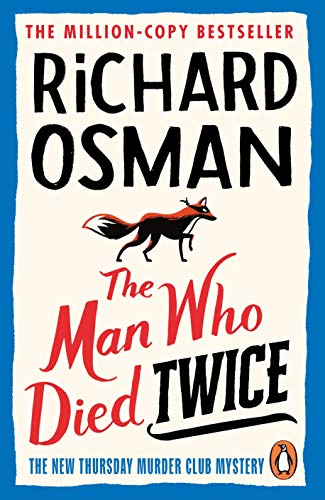
This is the second novel in the Thursday Murder Club series. I enjoyed it well enough.
The Thursday Murder Club is up to their antics again. This time there’s diamonds, mafia, and an ex-husband spy involved. Elizabeth, the leader of the club, receives a visit from her ex-husband, who’s asking for her help. He stole some diamonds and is now in trouble with the mafia. When he turns up dead, Elizabeth must untangle the mystery with the help of her four closest friends and a whole host of secondary characters.
The novel is a reasonably quick and light read. It occurred to me quite late on that the book is mostly telling rather than showing, but it’s effective here with all the characters.
As a sequel, it didn’t disappoint. The characters are still interesting and there’s a bit of growth for some of them.





 Should Be Writing